
Whether you are new to the Coptic Orthodox Church or looking for an Orthodox church near you, we would be happy to welcome you. Saint Peter & Saint Andrew Coptic Orthodox Church is located in Stamford, Connecticut, in Fairfield County, and serves families and visitors from Stamford and surrounding towns throughout the area. Come worship with us, meet our church family, and experience the life of our parish.

New Here?
Welcome to our church
A Guide for Visitors to Saint Peter & Saint Andrew Coptic Orthodox Church
A Few Things to Know Before You Come
Our Church Has a Unique Story
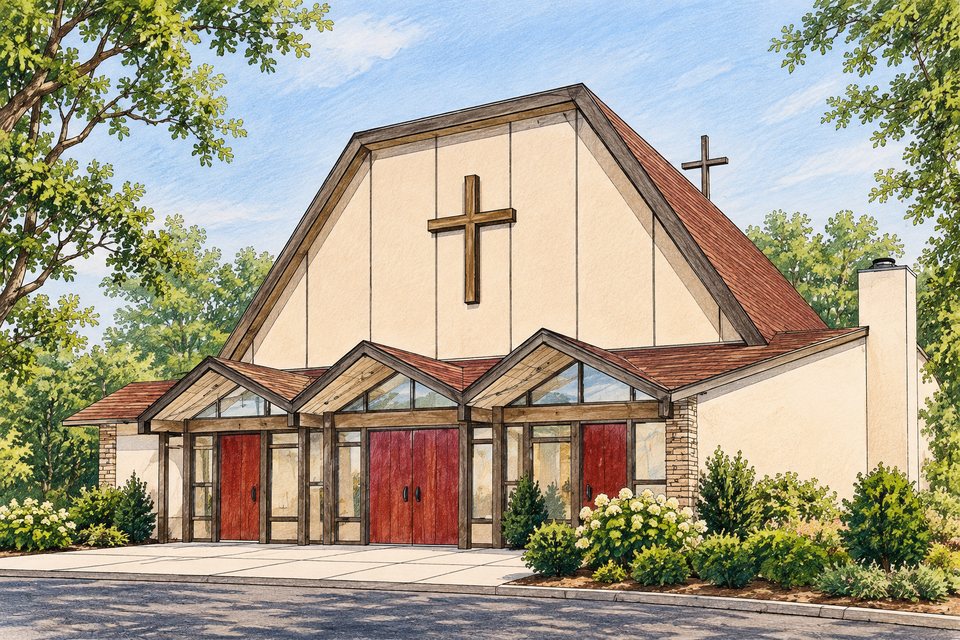
Our church may look a little different from a traditional Coptic Orthodox church. The building was originally an Episcopal church, and over the years we have made it our home, bringing into it the worship, icons, traditions, and spirit of the Coptic Orthodox Church.
“The Little Fish”
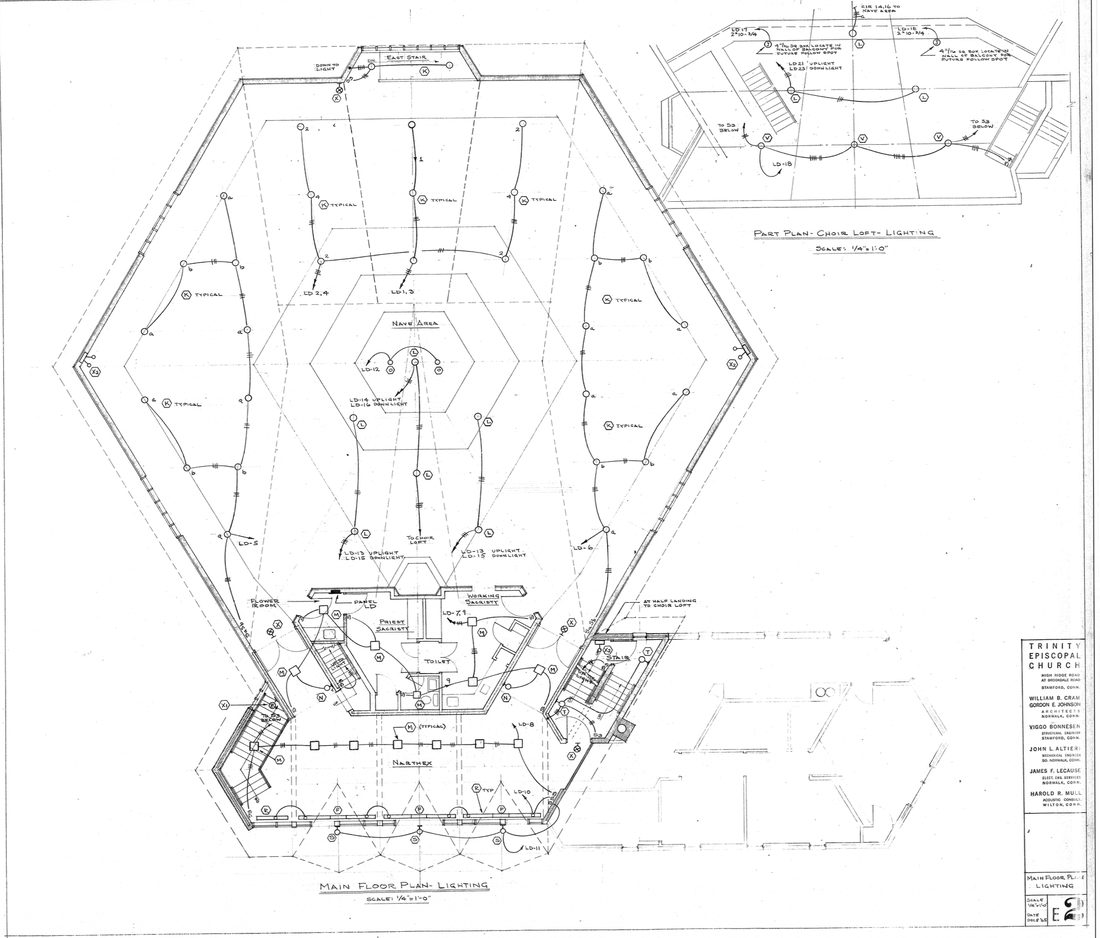
Here in Stamford, our building has affectionately been known as “the Little Fish” because of its distinctive shape and the way it appears from above.
For us, that name has taken on an even more beautiful meaning.
Our church is named for Saint Peter and Saint Andrew, two brothers who were fishermen when Christ called them. They left their nets behind and followed Him, and Christ transformed them from fishermen into “fishers of men” (Matthew 4:19).
In a beautiful way, the shape and nickname of our church reflect the lives of our patron saints and remind us of our own calling: to follow Christ and bring others to Him.
Since our parish was established in 2012, Saint Peter & Saint Andrew Coptic Orthodox Church has carried the names of these two brother apostles together. To our knowledge, SPSA is the only Coptic Orthodox church in the world dedicated jointly to Saint Peter and Saint Andrew.
So when you hear us call our church “the Little Fish,” it is more than a nickname. It has become part of our story—a reminder of the fishermen Christ called, the apostles whose names our church carries, and the mission He has given us today:
“Follow Me, and I will make you fishers of men.” — Matthew 4:19
Christ in our midst
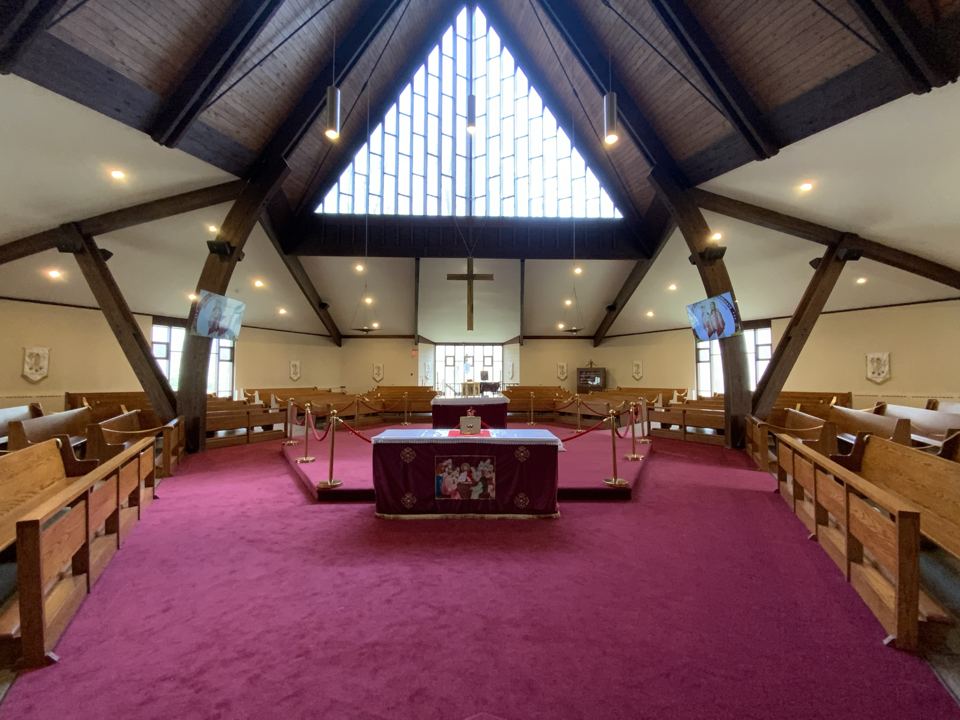
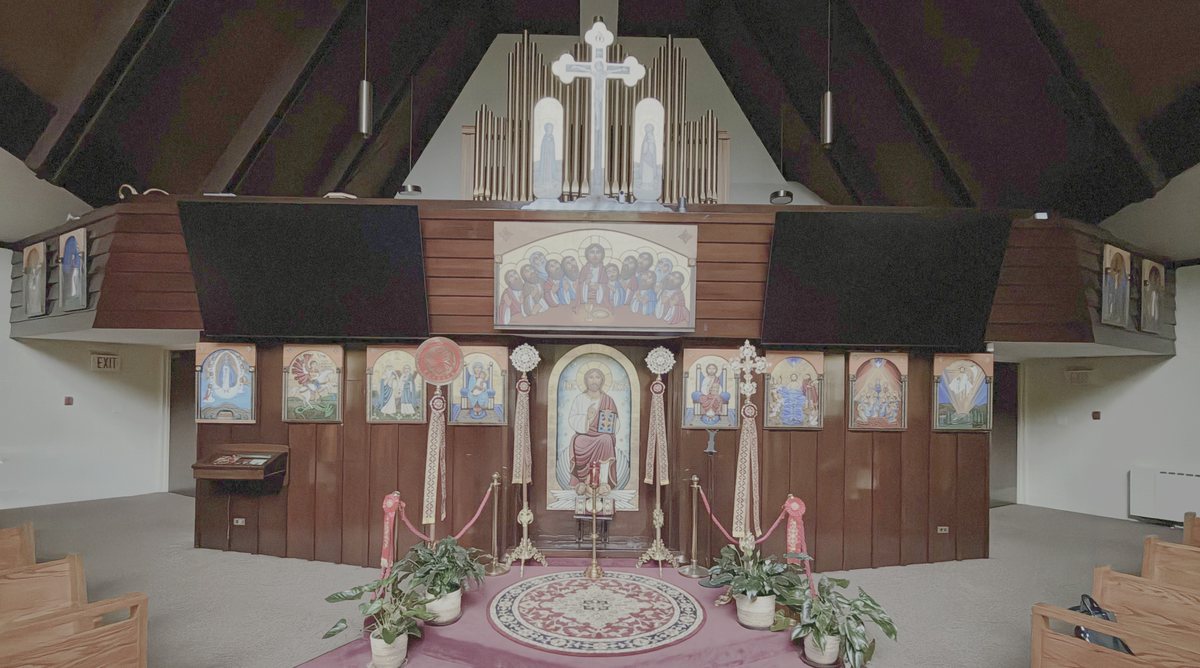
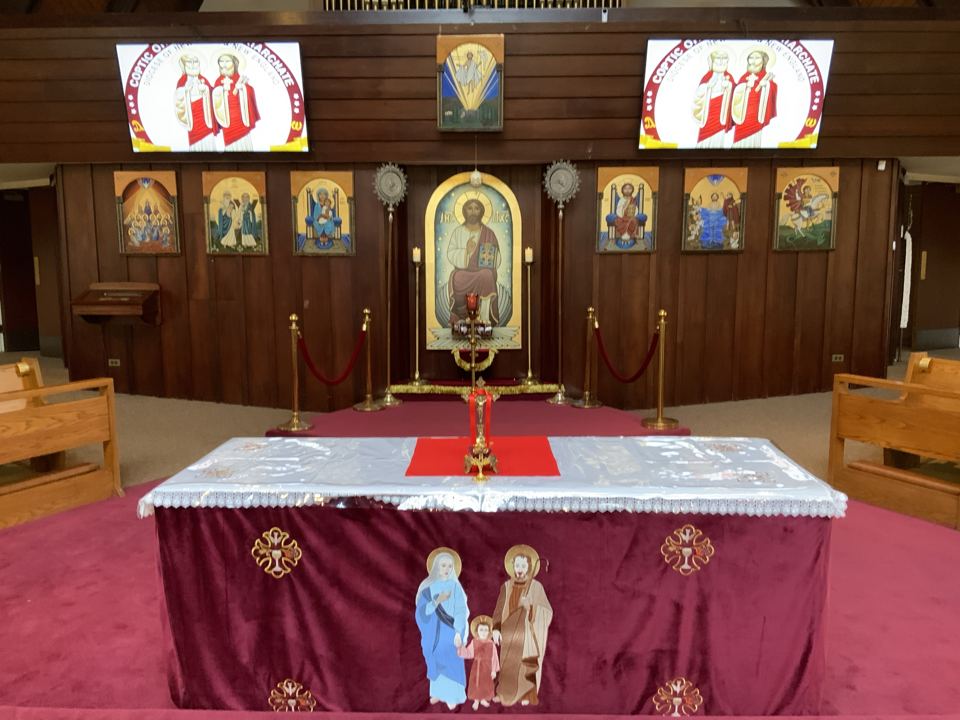
The church has a six-sided design, as it was originally built. We placed the altar in the center. It tells us that Christ is in our midst, and everyone, wherever they are sitting, can see Christ on the altar.
Following the service
Four large screens broadcast the liturgy in three languages, Arabic, English and Coptic, so that everyone can follow.
Sunday liturgy
8:30 AM to 11:00 AM
Welcome. We are truly glad you are here.
If this is your first time in a Coptic Orthodox Church, you may notice many things that are unfamiliar—the icons, incense, chanting, deacons, candles, the Sign of the Cross, and the way we worship.
Please do not worry about getting everything right.
You are not expected to know when to stand, when to sit, what to say, or what everything means. Come in, find a place with your family, and pray with us.
“Christ is in our midst.”“He is and ever shall be.”
This expresses what we believe about the Divine Liturgy. We do not simply gather to remember Christ. We gather in His presence.
Everything you see and hear today is ultimately meant to lead us to Him.
Before You Come
What is the Coptic Orthodox Church?
The Coptic Orthodox Church is one of the ancient apostolic Churches of Christianity. The word “Coptic” means Egyptian, and our Church traces its foundation to Saint Mark the Apostle and Evangelist, who preached the Gospel in Alexandria in the first century.
Today, the Coptic Church extends throughout the world and includes people from many cultures and backgrounds united in the Orthodox Christian faith.
At SPSA, we seek to preserve this ancient faith while sharing it clearly with our children, our community, and everyone God brings through our doors.
What should I wear?
There is no need to dress formally simply because you are visiting us. We ask everyone to dress modestly and respectfully, remembering that we are entering a place of prayer and coming before God.
The emphasis is not on judging what someone is wearing.
Come to church. Come to Christ.
Where should my family sit?
Families are welcome to sit and worship together.
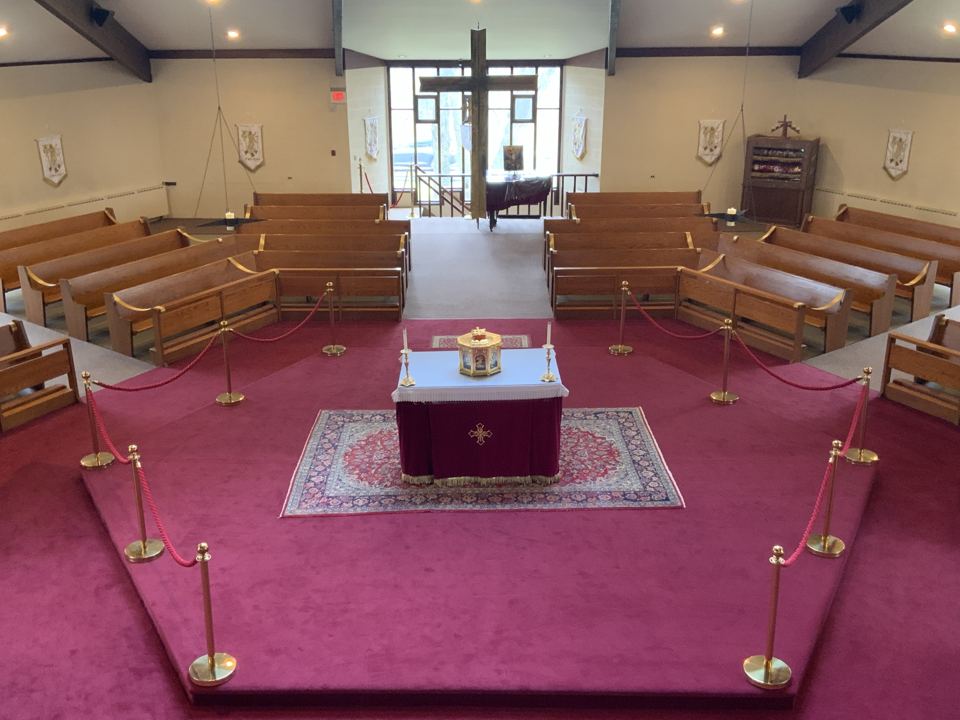
Our church has a unique six-sided design, with seating surrounding the sanctuary from several sides. Simply choose a place where you and your family are comfortable.
There is no “wrong” place for a visitor to sit.
Understanding Our Church
Why is the altar at the center?
Our church building was originally an Episcopal church and later became the home of Saint Peter & Saint Andrew Coptic Orthodox Church.
Because of its unique six-sided design, the congregation gathers around the sanctuary, with our attention drawn toward the altar.
For us, this beautifully expresses something at the heart of Orthodox worship:
Christ is in our midst.
We are not an audience watching a service. We are the Church gathered around Christ.
The altar is central because the Holy Eucharist is at the center of our worship. Everything continually brings our attention back to Christ.
What are the icons?
Around our sanctuary you will see icons of Christ, the Virgin Mary, the angels, apostles, and saints.
Icons are not simply decorations, and we do not worship them. Worship belongs to God alone.
They proclaim that God truly became man in Jesus Christ and remind us that when we worship, we are not alone. The Church on earth joins the worship of Heaven.
Why do people light candles?
A candle is a simple offering of prayer.
Its light reminds us of Christ, who said:
“I am the light of the world.”
John 8:12
People may light candles while praying for themselves, their families, those who are suffering, or those who have departed.
Visitors are welcome to light a candle and pray.
Why is there incense?
Incense has been part of the worship of God’s people since biblical times.
The Psalmist prays:
“Let my prayer be set before You as incense.”
Psalm 141:2
As the incense rises, we are reminded that our prayers rise before God.
Orthodox worship involves the whole person. We do not only hear the Liturgy—we see it, hear it, smell it, touch it, and participate in it.
The Divine Liturgy
What is the Divine Liturgy?
The Divine Liturgy is the heart of our life as Orthodox Christians.
The word “Liturgy” comes from the Greek leitourgia, meaning “the work of the people.”
The Liturgy is therefore not something the priest performs while everyone else watches. We worship together.
We gather to hear God’s Word, offer praise and thanksgiving, pray for the Church and the world, and ultimately approach the mystery of the Holy Eucharist.
At the center of all of this is not a ritual.
It is a Person: Jesus Christ.
How long is the service?
Sunday worship commonly lasts a few hours and includes prayers, hymns, Scripture readings, the sermon, Eucharistic prayers, and Holy Communion.
For someone visiting for the first time, this may feel long. But Orthodox worship asks us to slow down.
We spend much of our lives rushing from one responsibility to another. The Liturgy invites us to give God something precious: our time and our attention.
What language is used?
Our worship at SPSA is primarily in English.
The Scripture readings, sermon, and most prayers are in English so that our children, visitors, and community can understand and participate.
You will also hear some ancient Coptic hymns and responses, connecting us with generations of Christians who worshipped before us.
The screens throughout the church help everyone follow along.
If you lose your place, do not worry. Sometimes the best thing to do is simply listen and pray.
How Do I Participate?
When should I stand or sit?
You will see people standing, sitting, bowing, making the Sign of the Cross, and praying throughout the Liturgy.
Standing is the traditional posture of Orthodox prayer, especially during the Gospel and Eucharistic prayers.
But please do not worry about following every movement perfectly.
If you need to sit, sit.
The purpose of our outward actions is not simply to follow rules. They help direct our heart, mind, soul, and body toward God.
Why do people make the Sign of the Cross?
We make the Sign of the Cross in the name of the Father, the Son, and the Holy Spirit, One God. Amen.
The Cross reminds us of Christ’s victory over sin and death.
As a visitor, you are welcome to make the Sign of the Cross, but you should never feel pressured to copy everything happening around you.
What is the Kiss of Peace?
Before the Eucharistic prayer, the congregation exchanges a sign of peace.
Christ teaches us:
“First be reconciled to your brother, and then come and offer your gift.”
Matthew 5:24
Before approaching the altar, we are reminded to seek peace and reconciliation with one another.
Scripture & the Gospel
Why does everyone stand for the Gospel?
When the Holy Gospel is read, we stand because we believe Christ speaks to His Church through His Word.
The Gospel is not simply information about something Jesus said two thousand years ago. God’s Word is living.
As you listen, ask one simple question:
“Lord, what are You saying to me today?”
What is the sermon?
The sermon helps us understand the Scripture readings and, more importantly, asks how God’s Word should shape the way we live today.
At SPSA, the sermon is normally given in English and is meant to connect the ancient faith of the Church with our daily lives.
The Holy Eucharist
What is the Offering of the Lamb?
During the Divine Liturgy, the priest selects one loaf from among several loaves of bread.
This is called the Offering of the Lamb.
It points us toward Jesus Christ:
“Behold! The Lamb of God who takes away the sin of the world!”
John 1:29
From this point, the Liturgy continues drawing us toward the Eucharist.
What do Orthodox Christians believe about Holy Communion?
We believe that through the work of the Holy Spirit, the bread and wine offered upon the altar truly become the Body and Blood of our Lord Jesus Christ.
Holy Communion is not merely a symbol or reminder.
It is Christ giving Himself to His people.
This is why the Eucharist is approached with such reverence and why it stands at the center of our worship.
Can I Receive Holy Communion?
Holy Communion is the deepest expression of our unity with Christ and His Church. For this reason, the Eucharist is received by baptized Orthodox Christians who share the faith and sacramental life of the Church and who have prepared themselves through prayer, fasting, repentance, confession, and spiritual guidance.
The Coptic Orthodox Church is part of the Oriental Orthodox communion, a family of ancient apostolic Churches united in the same faith and sacramental communion. This family includes the Coptic Orthodox, Syriac Orthodox, Armenian Apostolic, Ethiopian Orthodox Tewahedo, Eritrean Orthodox Tewahedo, and Malankara Orthodox Syrian Churches.
Members of these sister Oriental Orthodox Churches who are properly prepared may receive Holy Communion in accordance with the pastoral practice of the Church.
If you are visiting from another Christian tradition, including the Eastern Orthodox, Roman Catholic, or Protestant traditions, we ask that you refrain from receiving Holy Communion.
Please do not understand this as rejection or a lack of welcome. We are genuinely glad that you are here and worshipping with us. Eucharistic Communion expresses an existing unity of faith and sacramental life; it is not simply an expression of friendship or hospitality.
Please remain with us, pray with us, and participate in the Divine Liturgy. If something about Christ, the Eucharist, or the Orthodox faith is stirring in your heart, please speak with one of our priests.
What is the blessed bread?
At the conclusion of the Liturgy, blessed bread is distributed.
You may hear it called eulogia or orban.
This is not Holy Communion, and visitors are welcome to receive it.
Children at SPSA
Are children welcome during the Liturgy?
Absolutely.
Children belong in the Church.
They are not simply the future of the Church. They are part of the Church today.
Children learn the Liturgy by experiencing it—seeing the altar, smelling the incense, hearing the hymns, watching their parents pray, receiving blessings, and gradually discovering that the Church is their spiritual home.
They may move. They may make noise. They may need a break.
That is okay.
Parents should never feel embarrassed because their children are present in church.
Questions Are Welcome
I don’t understand everything. Is that okay?
Absolutely.
None of us understood the Divine Liturgy in one day.
Orthodox worship has tremendous depth, and we continue discovering it throughout our lives.
Come again.
Listen.
Ask questions.
Read the Scriptures.
Pay attention to one new prayer each time.
And most importantly: pray.
Understanding grows with experience.
Before You Leave
Please introduce yourself to Father Andrew Awad. He would genuinely like to meet you.
Saint Peter & Saint Andrew is more than the building you entered today. We are a church family seeking to know Christ, grow in the Orthodox faith, raise our children in Him, serve one another, and share His love with our community.
If something you saw or heard today raised a question, please ask.
Questions are always welcome.
And if today was your first time worshipping with us, we pray it will not be your last.
CHRIST IS IN OUR MIDST.He is and ever shall be.
Saint Peter & Saint Andrew Coptic Orthodox Church
20 Brookdale Road
Stamford, CT 06903 (opens in a new tab)
SPSA.church
Visit Us
When we meet and in which language
ThursdayTHU
Arabic Bible StudyArabic
6:30 – 8:30 PM · Agpeya, Hymns, Bible Study & Tasbeha
FridayFRI
English Bible StudyEnglish
6:30 – 8:30 PM · Agpeya, Hymns, Bible Study & Tasbeha
SaturdaySAT
Hymns, Ritual, Vespers, and TasbehaEnglish & Coptic
6:00 – 9:00 PM
SundaySUN
LiturgyEnglish
8:30 – 11:00 AM
FellowshipEnglish & Arabic
11:00 AM – 12:00 PM
Sunday SchoolEnglish
12:00 – 1:00 PM
Orthodoxy 101English
1:00 – 1:30 PM · 2nd, 3rd and 4th Sundays of the month
Find us
Saint Peter & Saint Andrew Coptic Orthodox Church, Stamford, Connecticut
20 Brookdale Road, Stamford, Connecticut, 06903 (opens in a new tab)
We have a private parking lot on-site, so please feel free to park anywhere when you visit us!
Get directions (opens in a new tab)Contact Fr. Andrew Awad
Call or write to Father Andrew.
About our church
Our mission, Father Andrew and our patron saints.
The Coptic Church
The faith and life of the Coptic Orthodox Church.