Writer & teacher
From Fr. Tadros’s book
BIOGRAPHY
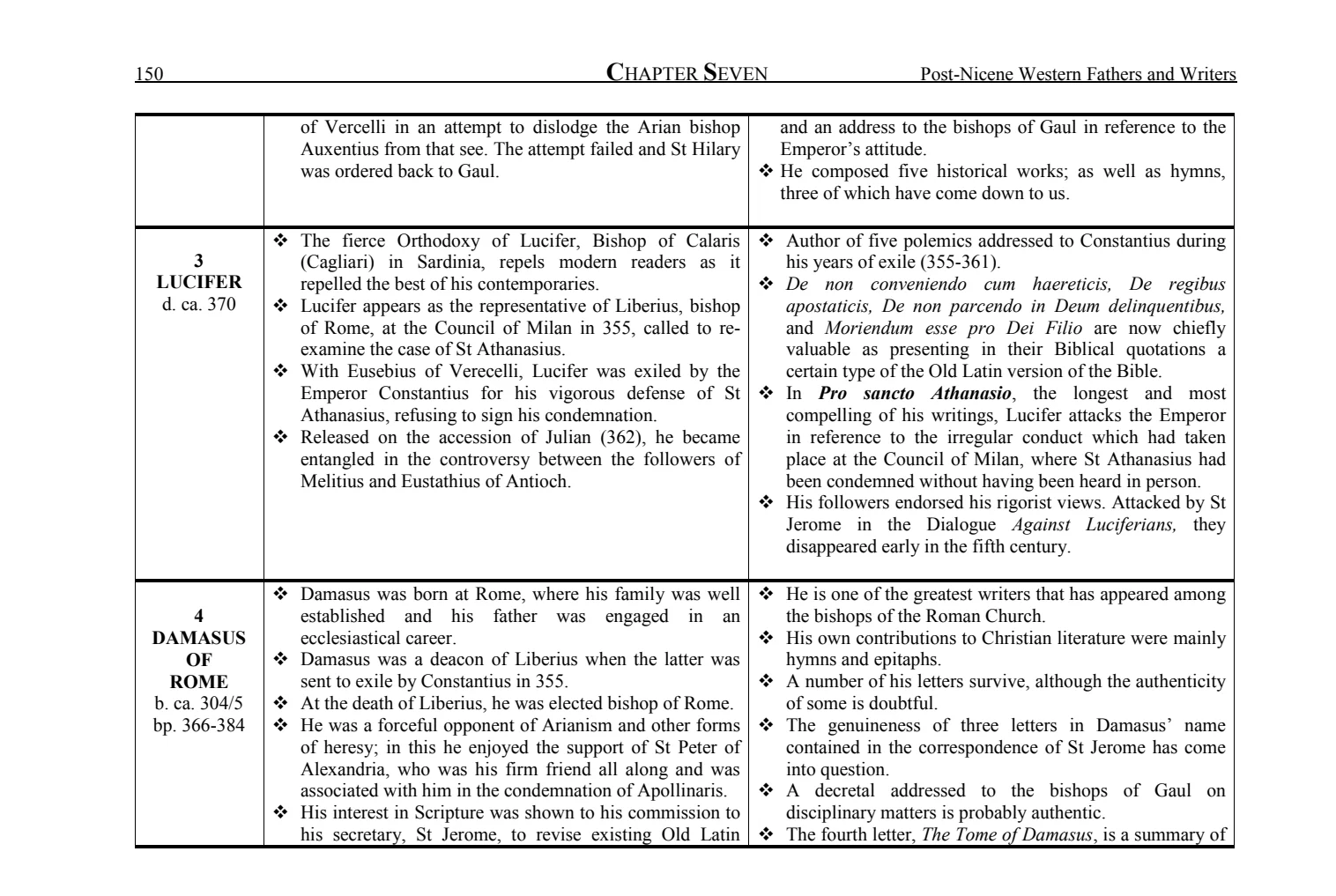
- The fierce Orthodoxy of Lucifer, Bishop of Calaris (Cagliari) in Sardinia, repels modern readers as it repelled the best of his contemporaries.
- Lucifer appears as the representative of Liberius, bishop of Rome, at the Council of Milan in 355, called to re-examine the case of St Athanasius.
- With Eusebius of Verecelli, Lucifer was exiled by the Emperor Constantius for his vigorous defense of St Athanasius, refusing to sign his condemnation.
- Released on the accession of Julian (362), he became entangled in the controversy between the followers of Melitius and Eustathius of Antioch.
WRITINGS
- Author of five polemics addressed to Constantius during his years of exile (355-361).
- De non conveniendo cum haereticis, De regibus apostaticis, De non parcendo in Deum delinquentibus, and Moriendum esse pro Dei Filio are now chiefly valuable as presenting in their Biblical quotations a certain type of the Old Latin version of the Bible.
- In Pro sancto Athanasio, the longest and most compelling of his writings, Lucifer attacks the Emperor in reference to the irregular conduct which had taken place at the Council of Milan, where St Athanasius had been condemned without having been heard in person.
- His followers endorsed his rigorist views. Attacked by St Jerome in the Dialogue Against Luciferians, they disappeared early in the fifth century.
From A Panoramic View of Patristics by Hegumen Fr. Tadros Yacoub Malaty (Preparatory edition, February 2005, St George’s Coptic Orthodox Church, Sporting, Alexandria).
Chapter 7, Post-Nicene Western writers, pp. 150–151
Original book pages (1)