Historical context
Historical context. Read Fr. Tadros’s assessment of this person’s teachings in context.
From Fr. Tadros’s book
The source's shared debate sentence begins on printed page 75 (PDF 94) and continues on printed page 76 (PDF 95); it has been joined without changing its wording. It concerns both Paul and Malchion.
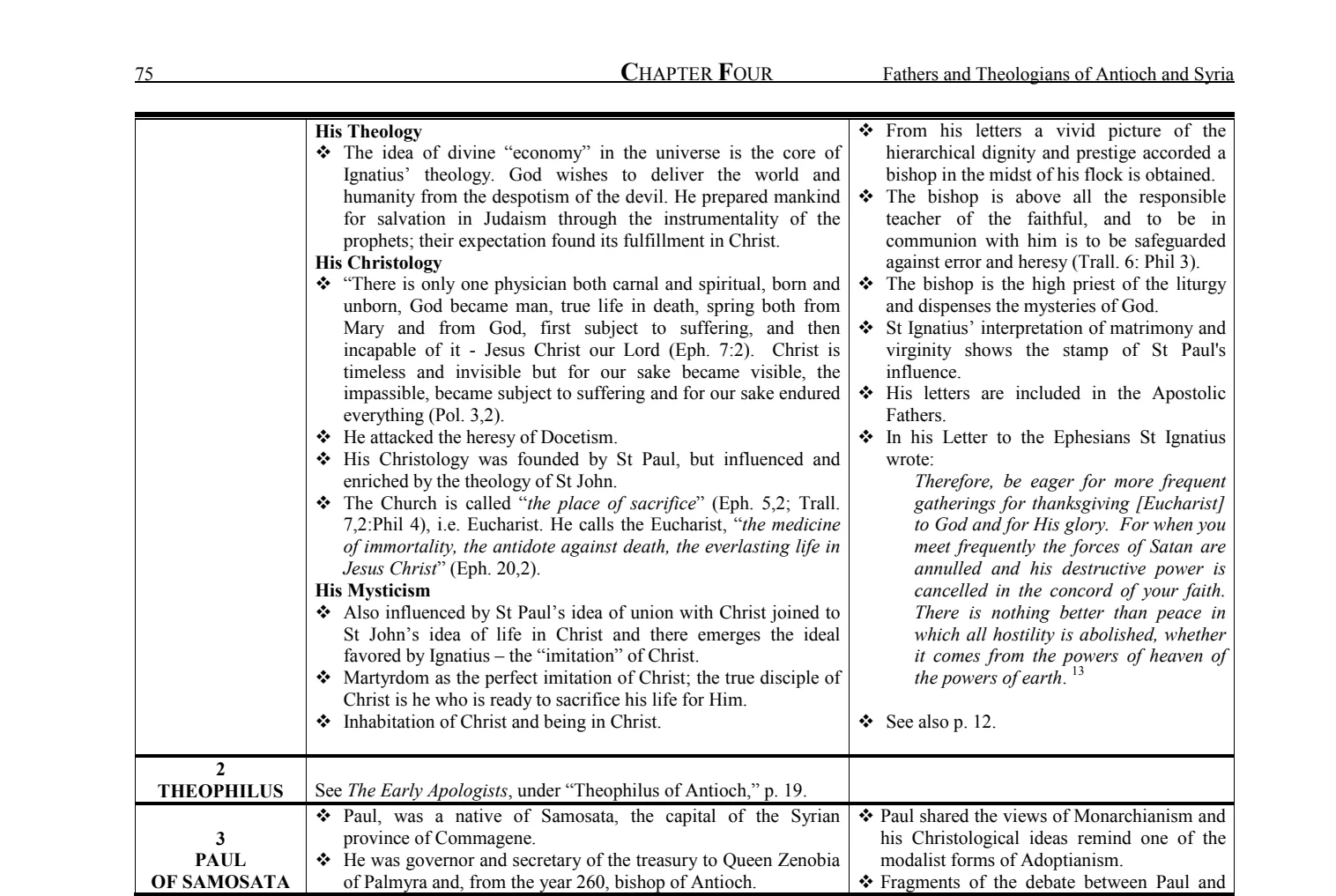
Printed p. 75
BIOGRAPHY
- Paul, was a native of Samosata, the capital of the Syrian province of Commagene.
- He was governor and secretary of the treasury to Queen Zenobia of Palmyra and, from the year 260, bishop of Antioch.
MAIN WRITINGS
- Paul shared the views of Monarchianism and his Christological ideas remind one of the modalist forms of Adoptianism.
- Fragments of the debate between Paul and Malchion, taken from the stenographic records, are extant in Leontius of Byzantium, the Emperor Justinian, and Peter the deacon.
This is the continuation of Paul's biography from the combined Paul/Malchion entry. The separate paragraphs about Malchion's authorship are shown under Malchion.
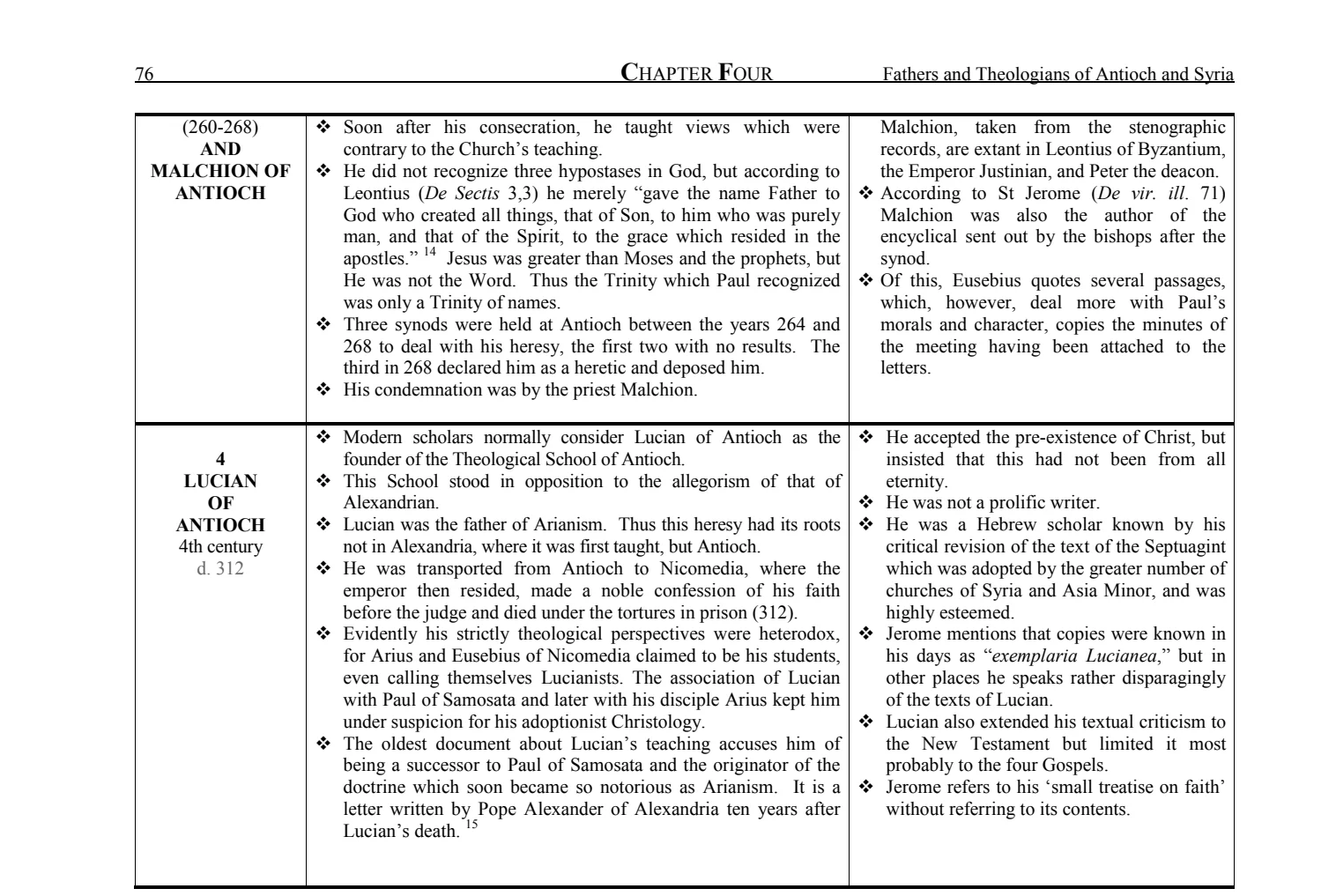
Printed p. 76
BIOGRAPHY
- Soon after his consecration, he taught views which were contrary to the Church’s teaching.
- He did not recognize three hypostases in God, but according to Leontius (De Sectis 3,3) he merely “gave the name Father to God who created all things, that of Son, to him who was purely man, and that of the Spirit, to the grace which resided in the apostles.” 14 Jesus was greater than Moses and the prophets, but He was not the Word. Thus the Trinity which Paul recognized was only a Trinity of names.
- Three synods were held at Antioch between the years 264 and 268 to deal with his heresy, the first two with no results. The third in 268 declared him as a heretic and deposed him.
- His condemnation was by the priest Malchion.
From A Panoramic View of Patristics by Hegumen Fr. Tadros Yacoub Malaty (Preparatory edition, February 2005, St George’s Coptic Orthodox Church, Sporting, Alexandria).
Chapter 4, Antioch and Syria, pp. 75–76