Writer & teacher
From Fr. Tadros’s book
BIOGRAPHY
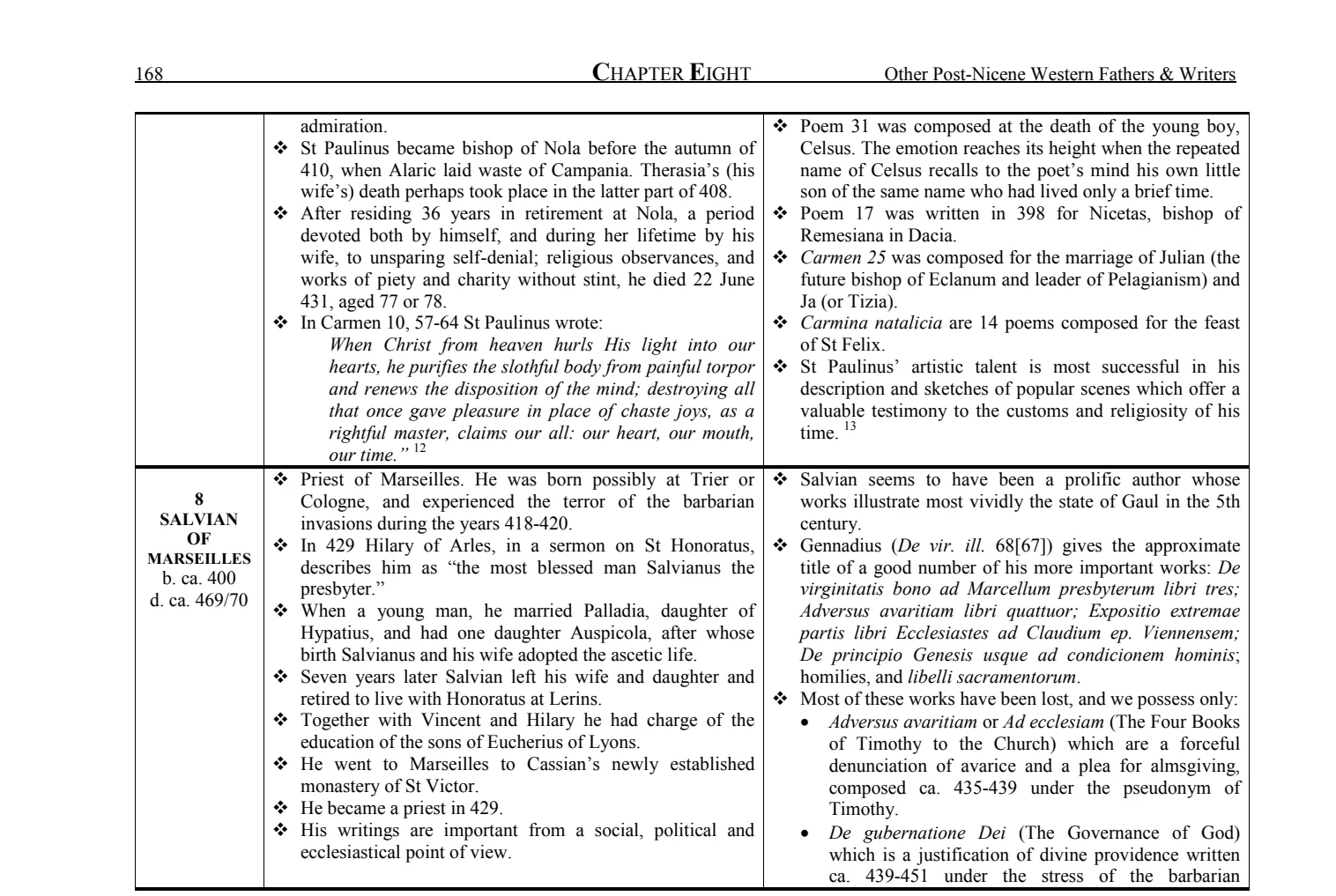
- Priest of Marseilles. He was born possibly at Trier or Cologne, and experienced the terror of the barbarian invasions during the years 418-420.
- In 429 Hilary of Arles, in a sermon on St Honoratus, describes him as “the most blessed man Salvianus the presbyter.”
- When a young man, he married Palladia, daughter of Hypatius, and had one daughter Auspicola, after whose birth Salvianus and his wife adopted the ascetic life.
- Seven years later Salvian left his wife and daughter and retired to live with Honoratus at Lerins.
- Together with Vincent and Hilary he had charge of the education of the sons of Eucherius of Lyons.
- He went to Marseilles to Cassian’s newly established monastery of St Victor.
- He became a priest in 429.
- His writings are important from a social, political and ecclesiastical point of view.
WRITINGS
- Salvian seems to have been a prolific author whose works illustrate most vividly the state of Gaul in the 5th century.
- Gennadius (De vir. ill. 68[67]) gives the approximate title of a good number of his more important works: De virginitatis bono ad Marcellum presbyterum libri tres; Adversus avaritiam libri quattuor; Expositio extremae partis libri Ecclesiastes ad Claudium ep. Viennensem; De principio Genesis usque ad condicionem hominis; homilies, and libelli sacramentorum.
- Most of these works have been lost, and we possess only:
- Adversus avaritiam or Ad ecclesiam (The Four Books of Timothy to the Church) which are a forceful denunciation of avarice and a plea for almsgiving, composed ca. 435-439 under the pseudonym of Timothy.
- De gubernatione Dei (The Governance of God) which is a justification of divine providence written ca. 439-451 under the stress of the barbarian invasions.
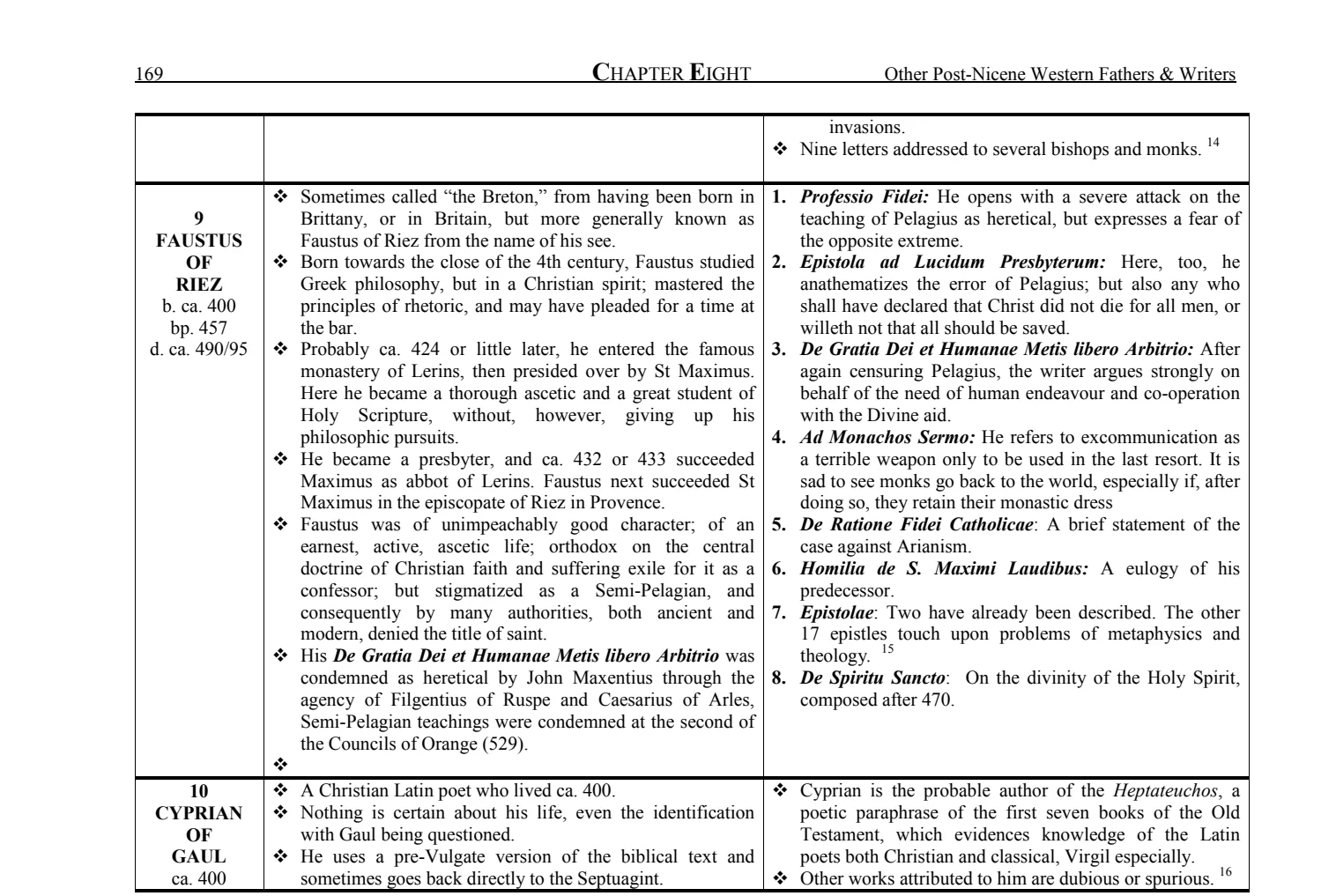
- Nine letters addressed to several bishops and monks. 14
From A Panoramic View of Patristics by Hegumen Fr. Tadros Yacoub Malaty (Preparatory edition, February 2005, St George’s Coptic Orthodox Church, Sporting, Alexandria).
Chapter 8, Other Post-Nicene Western writers, pp. 168–169