The answer
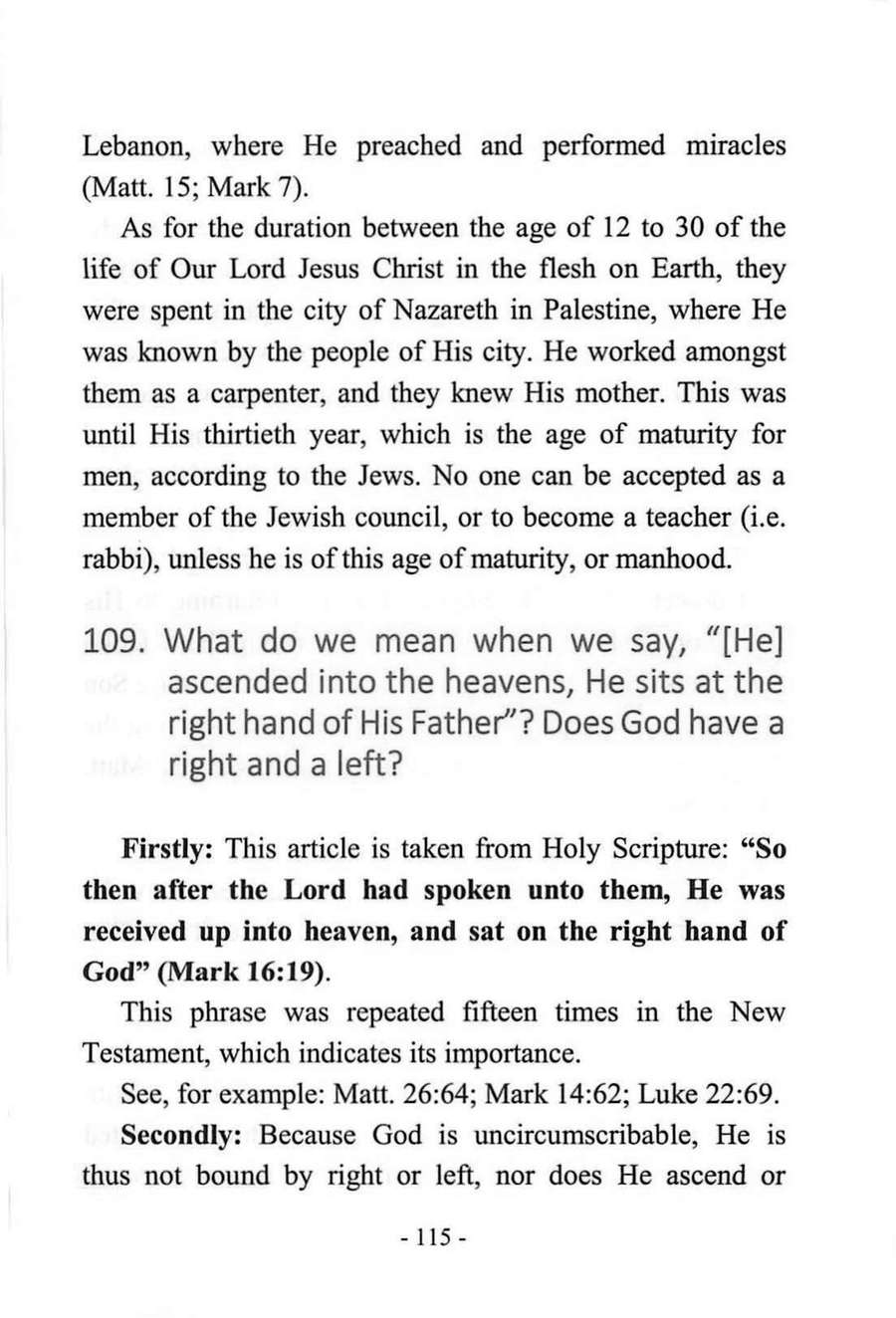
Firstly: This article is taken from Holy Scripture: “So then after the Lord had spoken unto them, He was received up into heaven, and sat on the right hand of God” (Mark 16:19).
This phrase was repeated fifteen times in the New Testament, which indicates its importance.
See, for example: Matt. 26:64; Mark 14:62; Luke 22:69.
Secondly: Because God is uncircumscribable, He is thus not bound by right or left, nor does He ascend or descend, because He is present everywhere and fills all things.
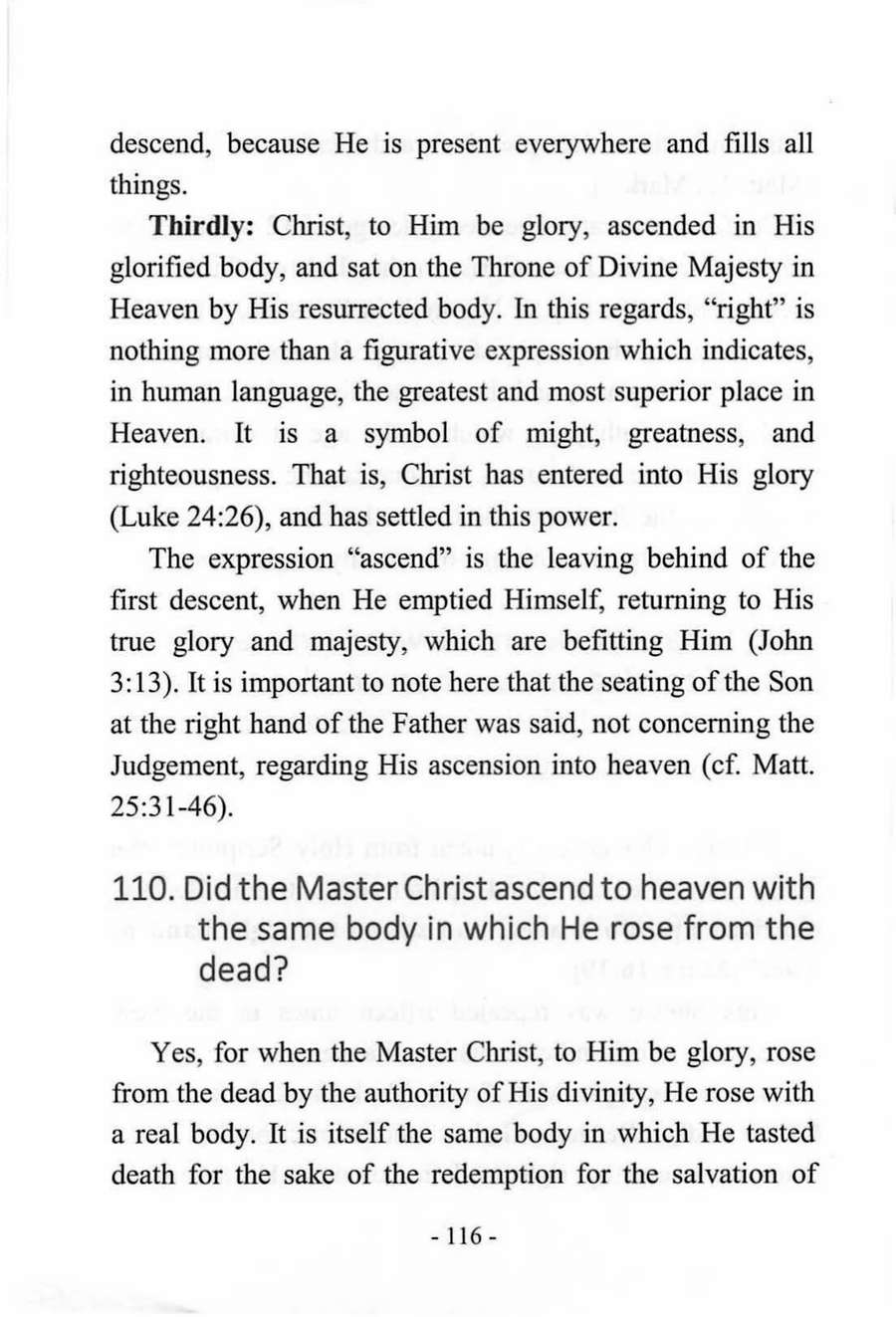
Thirdly: Christ, to Him be glory, ascended in His glorified body, and sat on the Throne of Divine Majesty in Heaven by His resurrected body. In this regards, “right” is nothing more than a figurative expression which indicates, in human language, the greatest and most superior place in Heaven. It is a symbol of might, greatness, and righteousness. That is, Christ has entered into His glory (Luke 24:26), and has settled in this power.
The expression “ascend” is the leaving behind of the first descent, when He emptied Himself, returning to His true glory and majesty, which are befitting Him (John 3:13). It is important to note here that the seating of the Son at the right hand of the Father was said, not concerning the Judgement, regarding His ascension into heaven (cf. Matt. 25:31-46).
His Holiness Pope Tawadros II
Pope Tawadros II, My Faith: A Series of Dialogues on the Creed (Coptic Orthodox Patriarchate, 2014), 115–116.
The pages in the book (115–116)