

Faith Q&A
My Faith
A Series of Dialogues on the Creed
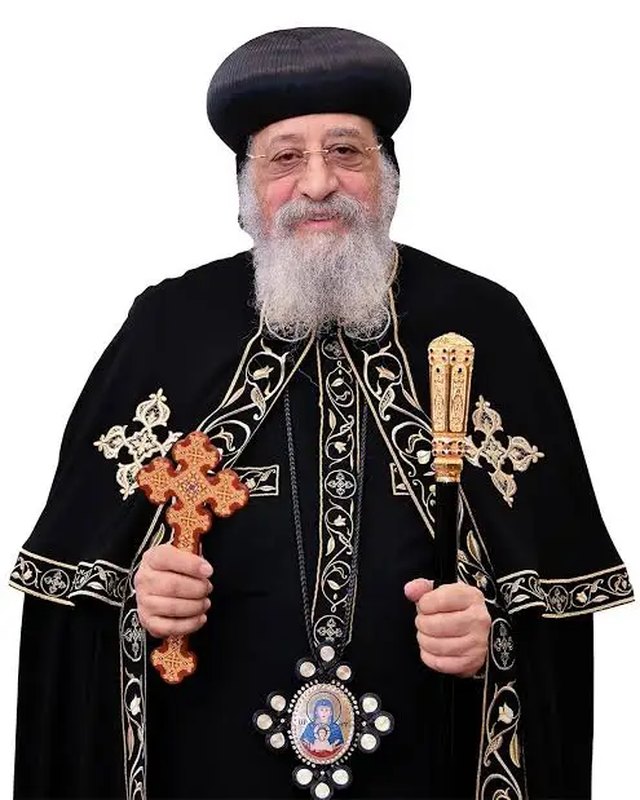
Questions answered by
His Holiness Pope Tawadros II
Pope of Alexandria and Patriarch of the See of St. Mark
148 questions on the Creed
These sorts of questions revolve around our Holy Faith, and are frequently repeated in youth meetings.
We present them through the Creed, which we recite in a prayerful spirit in every occasion.
We present them in a practical and fitting form, so that it may simultaneously be a comprehensive and concise reference.
It is beneficial for our youth and children in every Christian family, and to all who ask a reason of the hope that is in us.
- 1What is the right outlook with respect to the definition of the Christian Faith?
- 2Who, then, is the Christian Believer?
- 3What is the way by which I may live this life of Faith?
- 4Does not this understanding of Faith make Christianity’s primary concern Heaven, and not Earth in which we live in?
- 5Why was the Christian Faith formulated in the form of a Creed?
- 6What is the source of the Creed?
- 7When was the Creed formulated historically?
- 8What are the meanings of "Ecumenical Council" and "Heretic"?
- 9What is meant by "The Introduction to the Creed"?
- 10Can it be said that the Creed is the synopsis of Christianity?
- 11Why did the Church arrange that the Creed be recited in our prayers?
- 12What is to be understood from the first article of the Creed?
- 13How can we be certain of the reality of God’s existence?
- 14Does Christianity believe in One God?
- 15If this is so, why do we say that there are Three Persons (or Hypostases)?
- 16What is the meaning of the word "Hypostasis"?
- 17What is the meaning of the expression "Divine Essence"?
- 18Why is the reality of the Three Hypostases seemingly hard for some to grasp?
- 19Please elaborate further on this point.
- 20What, then, is the meaning of the Three Hypostases being in the One Divine Being?
- 21Does Holy Scripture attest to the Doctrine of the Trinity?
- 22Are the Divine Hypostases parts that form the Being of God?
- 23Are there no conflictions or contradictions between speaking of Oneness and Trinity?
- 24Is it true that the concept of the Christian Trinity is derived from the Ancient Egyptian Triad?
- 25Were there any erroneous theories concerning the Doctrine of the Trinity throughout history?
- 26Does my Faith in the doctrine of the Trinity mean that I associate with God (Polytheism)?
- 27What are the illustrations from everyday life that best demonstrate this doctrine?
- 28Is it necessary for my Faith to be in the Tri-Hypostatic One God?
- 29What does it mean when we describe God as “Pantocrator”?
- 30Who created the world: The Father alone, or the Three Hypostases together?
- 31We read some verses in Holy Scripture that speak of God the Father, or God the Son, or God the Holy Spirit. Is the One God referred to at times as Father, at others as Son, and at others as Holy Spirit? Or what? What is the meaning of this?
- 32What does the Apostle Paul mean when he says, “God, Who created all things by Jesus Christ” (Eph. 3:9)?
- 33Please provide a concise explanation of how Christianity understands the creation of man.
- 34What is the purpose of the creation of man?
- 35What are the meanings of the words “Jesus” and “Christ”?
- 36Earlier, we referred to God as “God,” but now we refer to God the Son as “Lord.” What is the difference?
- 37How can we say that Christ is the Son of God?
- 38Are there any who would disagree concerning this?
- 39Is there no better expression than “Son of God” that can be applied to Christ, to Whom be glory?
- 40We say that God the Father is “the First Hypostasis,” and that the Son is “the Second Hypostasis.” Does this not denote a difference in time between them?
- 41If we believe that Christ is the Son of God, why then do we say that He is Only-Begotten?
- 42Christ is the Son of God, and we are children of God. What is the difference?
- 43Why do we say that Christ is “begotten of the Father before all ages”?
- 44What is meant by the article “Light of Light; True God of True God”?
- 45We say that Christ, to Whom be glory, is “Light of Light.” Does this mean that the Light came from another Light? Is one of these lights the light that was at the beginning, which is mentioned at the beginning of the Book of Genesis?
- 46How can we say that He is “begotten, not created”?
- 47I have heard from some that the birth of Christ has to do with the divisions of creation; i.e. Adam was begotten without a father or a mother; Eve was born of a father without a mother; and Christ was born of a mother without a father.
- 48We say, “[O]f One Essence with the Father.” What is the relevance of this article in the Creed?
- 49In the Creed, we declare that Christ, “for us men and for our salvation, came down.” Salvation from what?
- 50What is sin according to the Christian perspective?
- 51Please elaborate on the Fall of Adam, and how his sin extended to all of humanity.
- 52Why, then, did the Loving God give Adam a commandment, forbidding him from the tree, even though He foreknew that he would disobey?
- 53What was the atypical punishment that was deservingly allotted to Adam and his descendants?
- 54Does this mean that evil is foreign to humanity?
- 55So, were there any consequences to this Fall?
- 56Did the image of man after the Fall change from what it was prior to that?
- 57This means that humanity was in need of someone to save it.
- 58Was it not possible for good works, such as prayer, fasting, and almsgiving, to bring about remission of sins for man?
- 59Is it possible to determine the characteristics of the One Who would carry out what is needed in response to the Fall of Adam?
- 60If that is the case, then how can these four traits be found in one person?
- 61Why is this considered the only solution?
- 62Christianity believes in the coming down of God to save man. Were there no other substitutions for this salvation that the Omnipotent God could offer?
- 63This means that the Incarnation took place to fulfill Redemption.
- 64Please provide a precise definition of “the Divine Incarnation.”
- 65How did the Incarnation take place?
- 66How was the Master Christ in Heaven and on Earth at the same time? Did He leave the Throne of His Majesty in Heaven during His Incarnation on Earth?
- 67Did the Incarnation bring about any change for God?
- 68How does the Uncircumscript God dwell in the circumscribed man?
- 69How can the Holy God unite to human nature, which is inferior?
- 70How can human beings see God Who is unseen?
- 71I read in the Gospel of John a verse which says, “No man hath seen God at any time” (John 1:18). In the same Gospel, I read another verse in which the Master Christ says, “[H]e that hath seen Me hath seen the Father” (John 14:9). Is there a contradiction between the two verses?
- 72So, was the sending of prophets prior to the coming of the Master Christ a preparation?
- 73Is the coming of God to man unique to Christianity alone?
- 74Why did the Second Person, the Hypostasis of the Word (Logos), specifically have to undergo the Incarnation?
- 75How can the Incarnation concern only one of the Hypostases without the Father and the Holy Spirit, even though it was said earlier that they are not divided?
- 76Who, then, is Christ to the Christians?
- 77Is there a role for the Virgin Mary in salvation?
- 78What is the difference between saying “incarnate,” and “inhominate”?
- 79Are there any other blessings that resulted from the Incarnation, other than it being a means for the redemption of man?
- 80Was the Master Christ truly crucified?
- 81Why, then, did the Master Christ, to Him be glory, choose crucifixion particularly as a method for death?
- 82Is the Cross of importance to the whole of humanity?
- 83Is this why we say, “He was crucified for us”?
- 84What did the Master Christ accomplish on the Cross?
- 85I know that the Master Christ was crucified on Golgotha. Is this the same place where God created the First Man Adam?
- 86I heard in Church that the statement of Isaiah the Prophet, “[T]he chastisement of our peace was upon him; and by his bruises we were healed” (Isa. 53:5 LXX), is concerned with the work of the Master Christ. How is this so?
- 87Who is Pontius Pilate?
- 88Some say that the one who was hung on the Cross is another person other than Christ. Is this true?
- 89I have read a theory that claims that Judas Iscariot died instead of Christ, after the matter was conflated for the soldiers, so they crucified him instead of Christ. Did this happen?
- 90Why do the Christians always make the Sign of the Cross?
- 91What do we mean by how we make the Sign of the Cross?
- 92If Christ is God, how can we say that He “suffered”? Does God suffer?
- 93We say also that He “was buried.” How can He die while being God? Who governed the universe when He was in the tomb?
- 94The last statement that was said concerning Christ, to Him be glory, while He was on the Cross, is that “He gave up the spirit.”37 What spirit was this?
- 95Do we not say that the Divinity of Christ parted not from His Humanity for a single moment, nor a twinkling of an eye? How then could He die?
- 96What does the denial of Christ’s Crucifixion mean?
- 97Is it for us to know what the Cross means today for the Christians?
- 98Christ is risen from the dead. Is this different from the miracles that He performed in which He raised people from the dead?
- 99How do we count the three days, which were spent by the Master Christ in the tomb?
- 100For Christians, did Sunday draw its importance from the resurrection of the Master Christ?
- 101Which books to we refer to when we say, “according to the Scriptures”?
- 102Is the “Gospel of Barnabas” among these books?
- 103Why is it necessary to have Four Gospels in the New Testament? Was one Gospel not sufficient?
- 104Are we to understand from this that the Master Christ is not the author of the Gospel?
- 105Were the Disciples of the Master Christ El-Hawarion? Why were they referred to as such?
- 106If the punishment of sin is death, and Christ died for us on the Cross and saved us, why then do we die?
- 107What is the status of Christ’s Resurrection in our Christian Faith?
- 108Before we speak about the Ascension of the Master Christ, is it true that He spent a duration of His life-between the age of 12 to 30-in India, after which He returned to Palestine to continue His general ministry, which is recorded in the Gospel?
- 109What do we mean when we say, “[He] ascended into the heavens, He sits at the right hand of His Father”? Does God have a right and a left?
- 110Did the Master Christ ascend to heaven with the same body in which He rose from the dead?
- 111Will Our Master Christ, to Him be glory, remain in His body forever?
- 112We know from before that the Incarnation and the Resurrection were for our salvation. However, what was the Ascension for?
- 113Why will He come again?
- 114Does this mean that there is no judgement immediately after death?
- 115On what basis will the Judgement take place?
- 116Why is Christ, to Him be glory, the Judge?
- 117What does the commandment of the Master Christ, “Judge not, that ye be not judged” (Matt. 7:1), mean?
- 118Can you please outline concisely the events of the Second Coming?
- 119Did the Lord delay His coming?
- 120I have heard some say that Christ will come to rule for a thousand years. Is this true?
- 121What does “Whose Kingdom shall have no end” mean?
- 122Does not speaking of matters which pertain to the End of Times invoke fear?
- 123Some say that the First Ecumenical Council, which set forth the Creed, did not speak of anything except the Divinity of the Father and the Son. It was only in a subsequent council that it was deemed that the Holy Spirit should be added to Them. Is this true?
- 124What does the article, “[T]he Lord, the Giver of Life,” mean?
- 125What is meant by, “Who proceeds from the Father”?
- 126Why do we affirm the worship and glorification of the Holy Spirit?
- 127Is it possible to say that Christians worship the Three Hypostases together?
- 128What does, “Who spoke by the prophets,” mean?
- 129What is meant by the word “prophet,” and how many are there of them in Holy Scripture?
- 130Is Christ’s promise of sending the Holy Spirit (Acts 1:4-8) a sign of another coming that is after His?
- 131Can the Holy Spirit work in unbelievers? Is this supported from Holy Scripture?
- 132What does the word “Church” mean linguistically and terminologically?
- 133What is the function of the Church in the world?
- 134What are the characteristics of this Church, according to Her doctrine?
- 135I have heard the expression, “The Church, the Body of Christ.” What does that mean?
- 136What did the Master Christ mean when He said to the Apostle Peter, “[T]hou art Peter; and upon this rock I will build My Church” (Matt: 16:18)?
- 137How can we say “One Church” when the Church is divided into many denominations and factions?
- 138Please provide a concise summary of the Church’s divisions throughout the centuries.
- 139If this portion of the Creed is concerned with the defense of the Holy Spirit’s divinity, why does it extend to the Church, Her characteristics, Baptism, etc.?
- 140What is Baptism?
- 141What does it mean that Baptism is for the remission of sins?
- 142Why do we describe Baptism as being one?
- 143What is “the resurrection of the dead” that we look for?
- 144What is death, and who are the dead?
- 145What did the Master Christ mean when he addressed the Jews saying, “If a man keep My saying, he shall never see death” (John 8:51), given that those who have believed in Christ have died like anyone else?
- 146Why do we be believe in the necessity of the General Resurrection?
- 147What is meant by “the life of the coming age”?
- 148What does the word “Amen,” which concludes the Creed and all of our prayers, mean?
Introduction
This book was first published in 1990 in the Metropolis of Beheira, Matrouh, and Pentapolis, and has been republished a number of times ever since in different publications. Its targeted readership is primarily the youth of secondary school and university (16-25), at whose age questions and inquiries recur concerning our Holy Faith.
So, we have gathered a number of these questions, categorised them systematically according to the articles of the Creed1, and set them in the form of sequential dialogues of a 148 questions and answers. We sought precision, simplicity and depth, in order to present this work in a practical and fitting manner, so that it may be simultaneously comprehensive and concise to our youth in every Christian family, and so that it may be beneficial to all who ask a reason of the hope that is in us.
Our aim is to present the basics of our Christian and Church life in the form of questions and answers, as it is one of the most beneficial and effective forms of Christian education for all ages.
“Without faith [it is] impossible to please [Him]” (Heb. 11:6).
Pope Tawadros the Second
The Monastery of Abba Bishoy in Wadi el-Natrun
July 31, 2014
Notes
1 Translator’s note: Literally, “Rule of Faith.”
References
Thrice-Blessed Pope Shenouda the Third:
- 1. The Life of Faith
- 2. Years with the Questions of People (1-4)
- 3. Lectures in Doctrinal Theology
Thrice-Blessed Anba Gregorius:
- 1. Articles on Holy Scripture (4, 5, and 6)
- 2. The Unity of God in Christian Doctrine
- 3. A Concise Explanation of the Christian Rule of Faith
Thrice-Blessed Anba Youannis:
- 1. Our Most Holy Faith.
- 2. Our Holy Scripture, and Our Holy Christ
- 3. The Doctrine of the Christians Concerning Christ
His Grace Anba Mousa:
St. Athanasius the Apostolic Explains the Incarnation, Redemption, and the Resurrection.
Thrice-Repose Presbyter Manasseh Youhanna:
Teaching the Christian Faith
Protopresbyter Tadrous Yacoub:
The Nature of Christ According to the Understanding of the Coptic Orthodox Church
Metropolis of Giza:
The First Principles of Christian Doctrine
El-Nour Publications, Lebanon:
Introduction to the Christian Doctrine
Mr. Milad Zaki:
An Illustrated Explanation of the Creed
His Holiness Pope Tawadros II, Pope of Alexandria and Patriarch of the See of St. Mark, My Faith: A Series of Dialogues on the Creed. Coptic Orthodox Patriarchate, Cairo; printed at Saint Mena Monastery Press, Maryut, Egypt. ISBN 978-977-344-149-7.