The answer
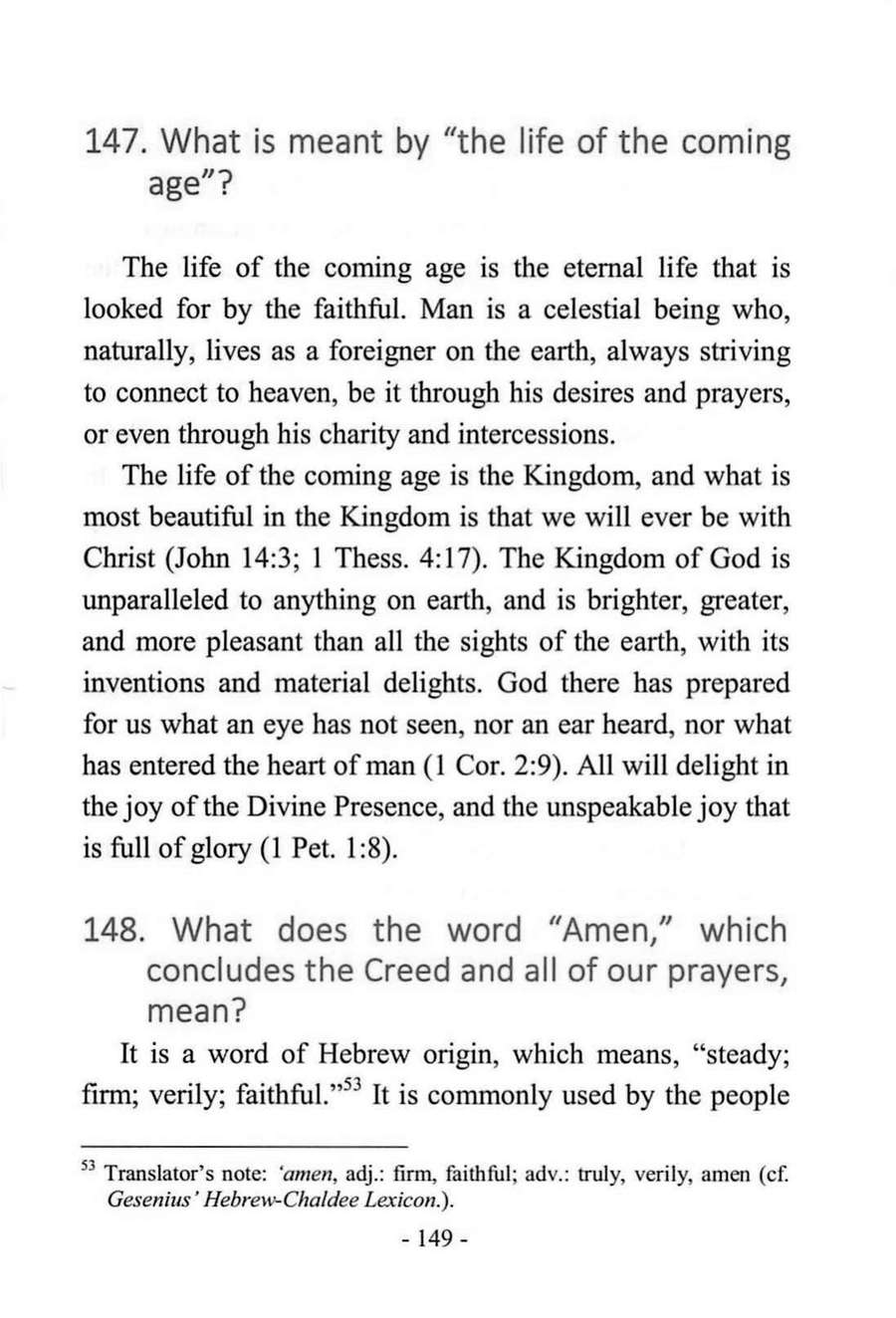
It is a word of Hebrew origin, which means, “steady; firm; verily; faithful.”53 It is commonly used by the people of the earth and its religions, and is said almost in the same way, with a slight difference in pronunciation at times.
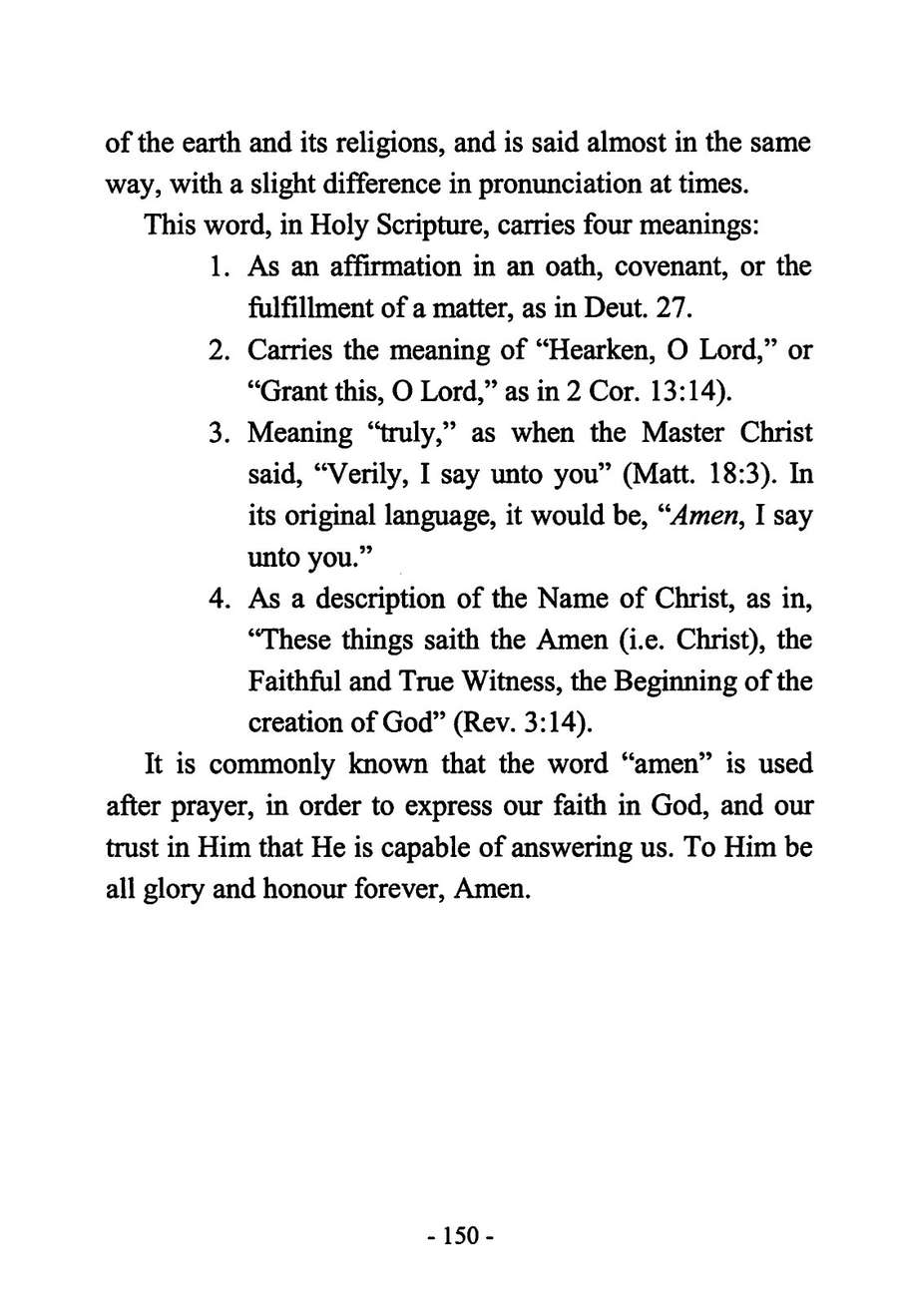
This word, in Holy Scripture, carries four meanings:
- 1. As an affirmation in an oath, covenant, or the fulfillment of a matter, as in Deut. 27.
- 2. Carries the meaning of “Hearken, O Lord,” or “Grant this, O Lord,” as in 2 Cor. 13:14).
- 3. Meaning “truly,” as when the Master Christ said, “Verily, I say unto you” (Matt. 18:3). In its original language, it would be, “Amen, I say unto you.”
- 4. As a description of the Name of Christ, as in, “These things saith the Amen (i.e. Christ), the Faithful and True Witness, the Beginning of the creation of God” (Rev. 3:14).
It is commonly known that the word “amen” is used after prayer, in order to express our faith in God, and our trust in Him that He is capable of answering us. To Him be all glory and honour forever, Amen.
His Holiness Pope Tawadros II
Notes
53 Translator’s note: ‘amen, adj.: firm, faithful; adv.: truly, verily, amen (cf. Gesenius’ Hebrew-Chaldee Lexicon.).
Pope Tawadros II, My Faith: A Series of Dialogues on the Creed (Coptic Orthodox Patriarchate, 2014), 149–150.
The pages in the book (149–150)