Writer & teacher
From Fr. Tadros’s book
BIOGRAPHY
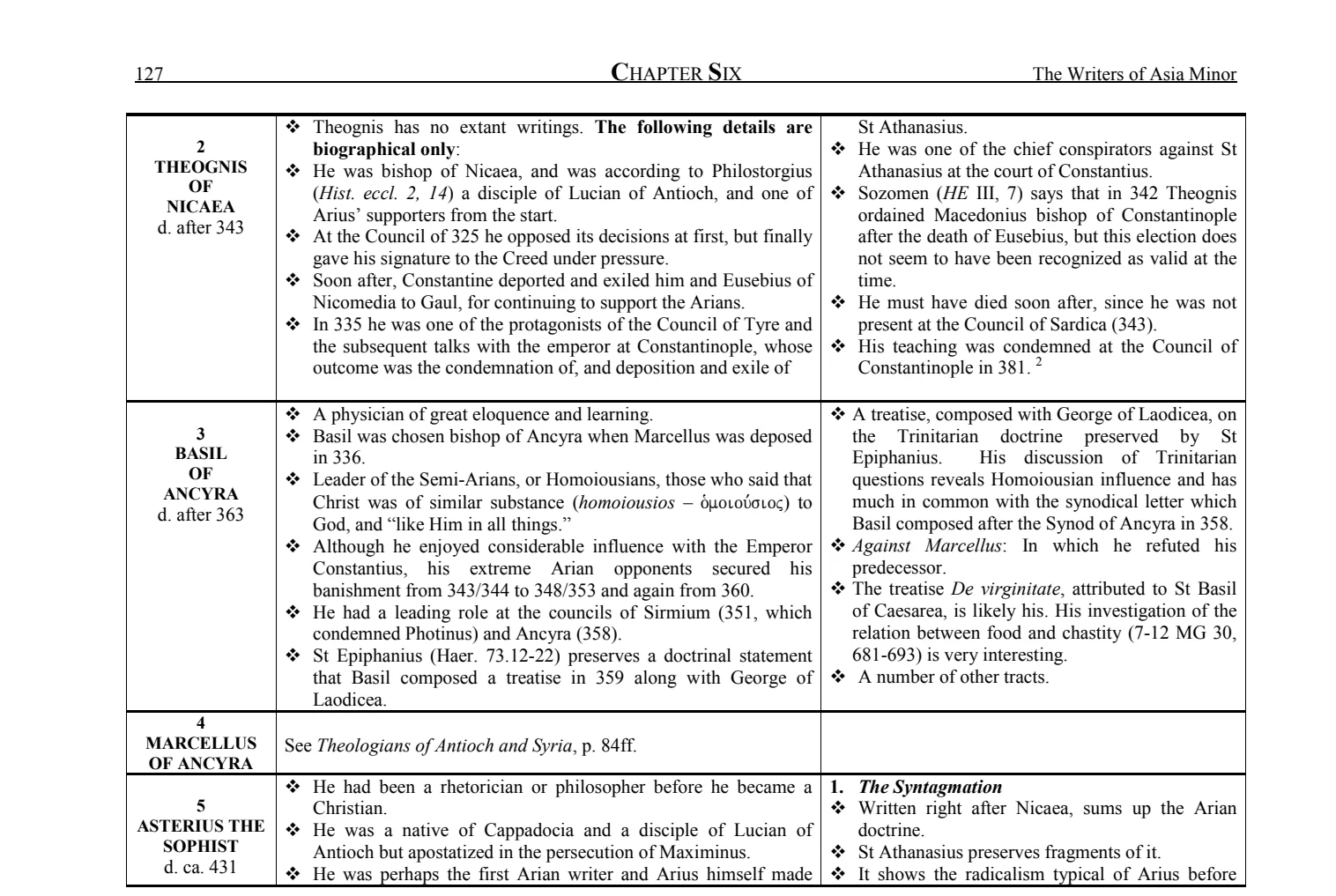
- He had been a rhetorician or philosopher before he became a Christian.
- He was a native of Cappadocia and a disciple of Lucian of Antioch but apostatized in the persecution of Maximinus.
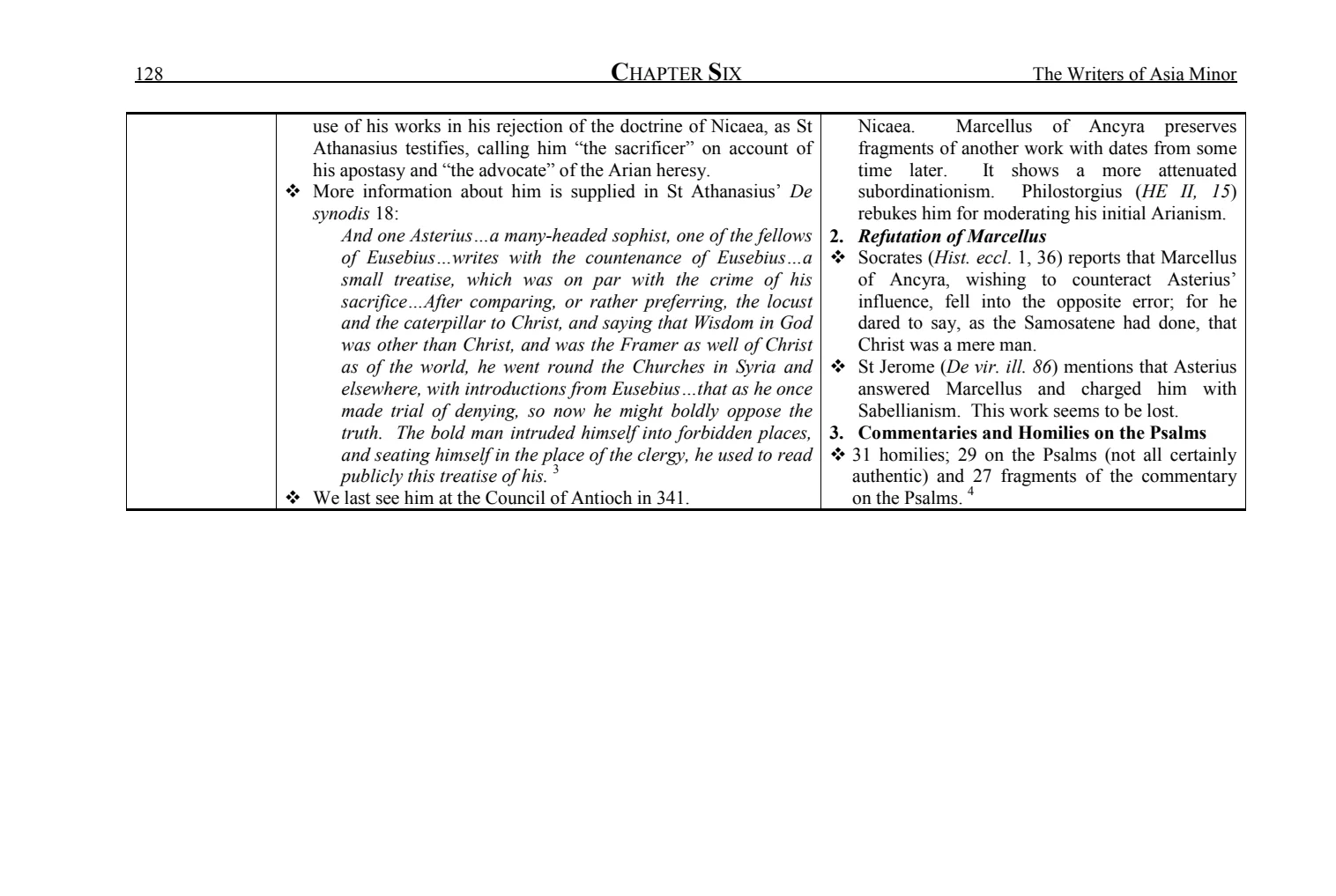
- He was perhaps the first Arian writer and Arius himself made use of his works in his rejection of the doctrine of Nicaea, as St Athanasius testifies, calling him “the sacrificer” on account of his apostasy and “the advocate” of the Arian heresy.
- More information about him is supplied in St Athanasius’ De synodis 18: And one Asterius…a many-headed sophist, one of the fellows of Eusebius…writes with the countenance of Eusebius…a small treatise, which was on par with the crime of his sacrifice…After comparing, or rather preferring, the locust and the caterpillar to Christ, and saying that Wisdom in God was other than Christ, and was the Framer as well of Christ as of the world, he went round the Churches in Syria and elsewhere, with introductions from Eusebius…that as he once made trial of denying, so now he might boldly oppose the truth. The bold man intruded himself into forbidden places, and seating himself in the place of the clergy, he used to read publicly this treatise of his. 3
- We last see him at the Council of Antioch in 341.
WRITINGS
1. The Syntagmation
- Written right after Nicaea, sums up the Arian doctrine.
- St Athanasius preserves fragments of it.
- It shows the radicalism typical of Arius before Nicaea. Marcellus of Ancyra preserves fragments of another work with dates from some time later. It shows a more attenuated subordinationism. Philostorgius (HE II, 15) rebukes him for moderating his initial Arianism.
2. Refutation of Marcellus
- Socrates (Hist. eccl. 1, 36) reports that Marcellus of Ancyra, wishing to counteract Asterius’ influence, fell into the opposite error; for he dared to say, as the Samosatene had done, that Christ was a mere man.
- St Jerome (De vir. ill. 86) mentions that Asterius answered Marcellus and charged him with Sabellianism. This work seems to be lost.
3. Commentaries and Homilies on the Psalms
- 31 homilies; 29 on the Psalms (not all certainly authentic) and 27 fragments of the commentary on the Psalms. 4
From A Panoramic View of Patristics by Hegumen Fr. Tadros Yacoub Malaty (Preparatory edition, February 2005, St George’s Coptic Orthodox Church, Sporting, Alexandria).
Chapter 6, Writers of Asia Minor, p. 127