Writer & teacher
From Fr. Tadros’s book
Printed p. 14
ABOUT HIS WRITINGS
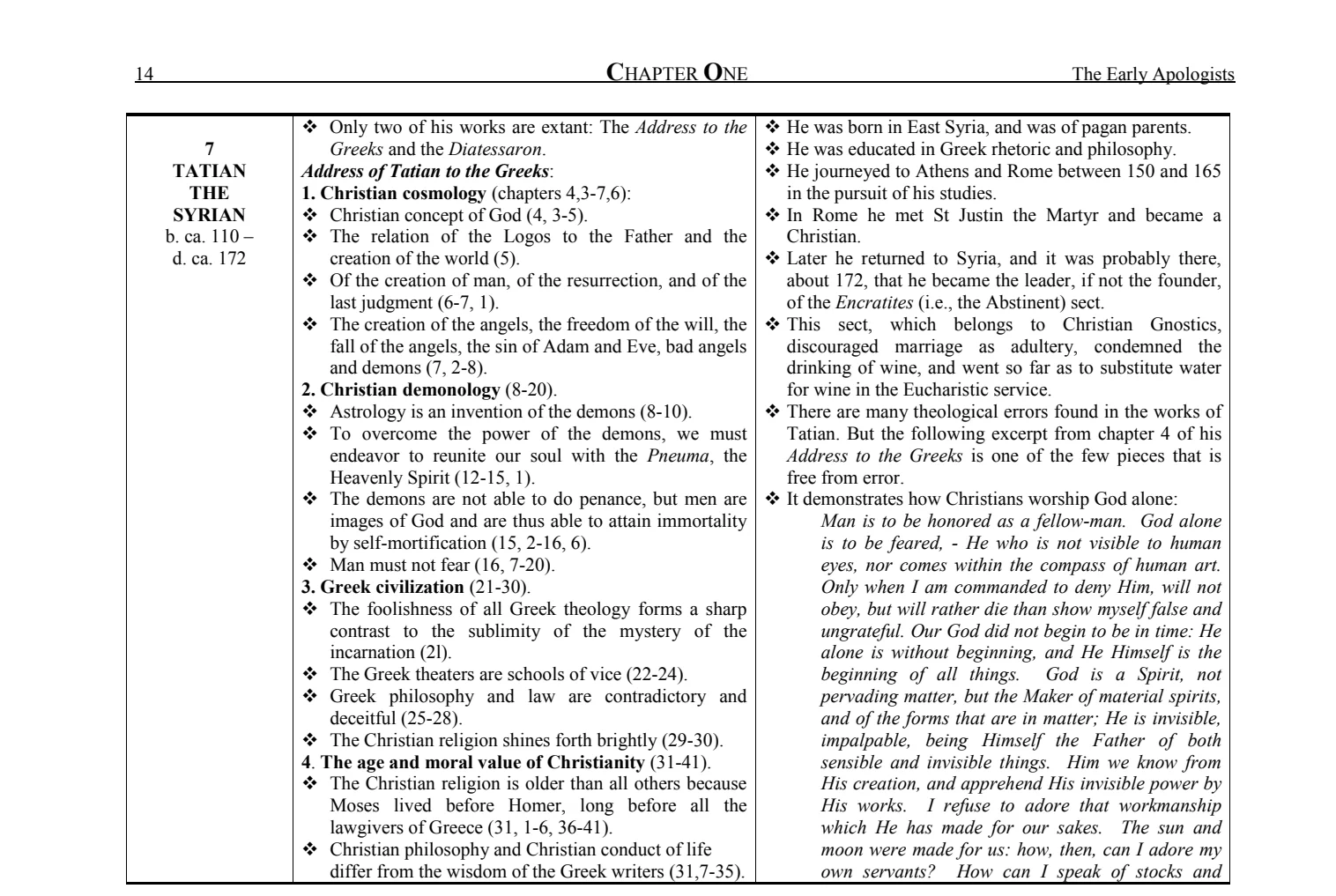
- Only two of his works are extant: The Address to the Greeks and the Diatessaron.
Address of Tatian to the Greeks:
1. Christian cosmology (chapters 4,3-7,6):
- Christian concept of God (4, 3-5).
- The relation of the Logos to the Father and the creation of the world (5).
- Of the creation of man, of the resurrection, and of the last judgment (6-7, 1).
- The creation of the angels, the freedom of the will, the fall of the angels, the sin of Adam and Eve, bad angels and demons (7, 2-8).
2. Christian demonology (8-20).
- Astrology is an invention of the demons (8-10).
- To overcome the power of the demons, we must endeavor to reunite our soul with the Pneuma, the Heavenly Spirit (12-15, 1).
- The demons are not able to do penance, but men are images of God and are thus able to attain immortality by self-mortification (15, 2-16, 6).
- Man must not fear (16, 7-20).
3. Greek civilization (21-30).
- The foolishness of all Greek theology forms a sharp contrast to the sublimity of the mystery of the incarnation (2l).
- The Greek theaters are schools of vice (22-24).
- Greek philosophy and law are contradictory and deceitful (25-28).
- The Christian religion shines forth brightly (29-30).
4. The age and moral value of Christianity (31-41).
- The Christian religion is older than all others because Moses lived before Homer, long before all the lawgivers of Greece (31, 1-6, 36-41).
- Christian philosophy and Christian conduct of life differ from the wisdom of the Greek writers (31,7-35).
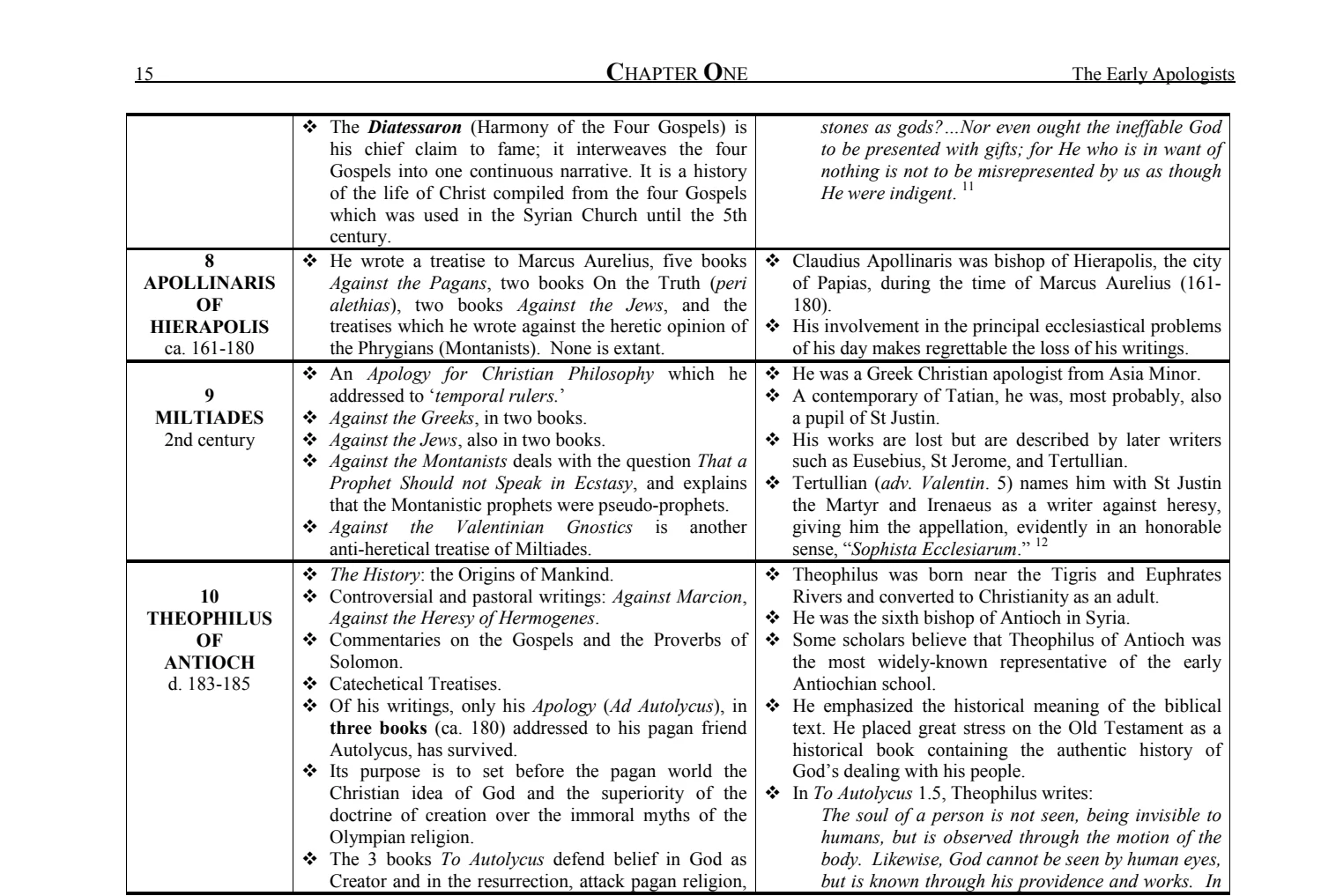
- The Diatessaron (Harmony of the Four Gospels) is his chief claim to fame; it interweaves the four Gospels into one continuous narrative. It is a history of the life of Christ compiled from the four Gospels which was used in the Syrian Church until the 5th century.
REMARKS
- He was born in East Syria, and was of pagan parents.
- He was educated in Greek rhetoric and philosophy.
- He journeyed to Athens and Rome between 150 and 165 in the pursuit of his studies.
- In Rome he met St Justin the Martyr and became a Christian.
- Later he returned to Syria, and it was probably there, about 172, that he became the leader, if not the founder, of the Encratites (i.e., the Abstinent) sect.
- This sect, which belongs to Christian Gnostics, discouraged marriage as adultery, condemned the drinking of wine, and went so far as to substitute water for wine in the Eucharistic service.
- There are many theological errors found in the works of Tatian. But the following excerpt from chapter 4 of his Address to the Greeks is one of the few pieces that is free from error.
- It demonstrates how Christians worship God alone: Man is to be honored as a fellow-man. God alone is to be feared, - He who is not visible to human eyes, nor comes within the compass of human art. Only when I am commanded to deny Him, will not obey, but will rather die than show myself false and ungrateful. Our God did not begin to be in time: He alone is without beginning, and He Himself is the beginning of all things. God is a Spirit, not pervading matter, but the Maker of material spirits, and of the forms that are in matter; He is invisible, impalpable, being Himself the Father of both sensible and invisible things. Him we know from His creation, and apprehend His invisible power by His works. I refuse to adore that workmanship which He has made for our sakes. The sun and moon were made for us: how, then, can I adore my own servants? How can I speak of stocks and stones as gods?…Nor even ought the ineffable God to be presented with gifts; for He who is in want of nothing is not to be misrepresented by us as though He were indigent. 11
Printed p. 98
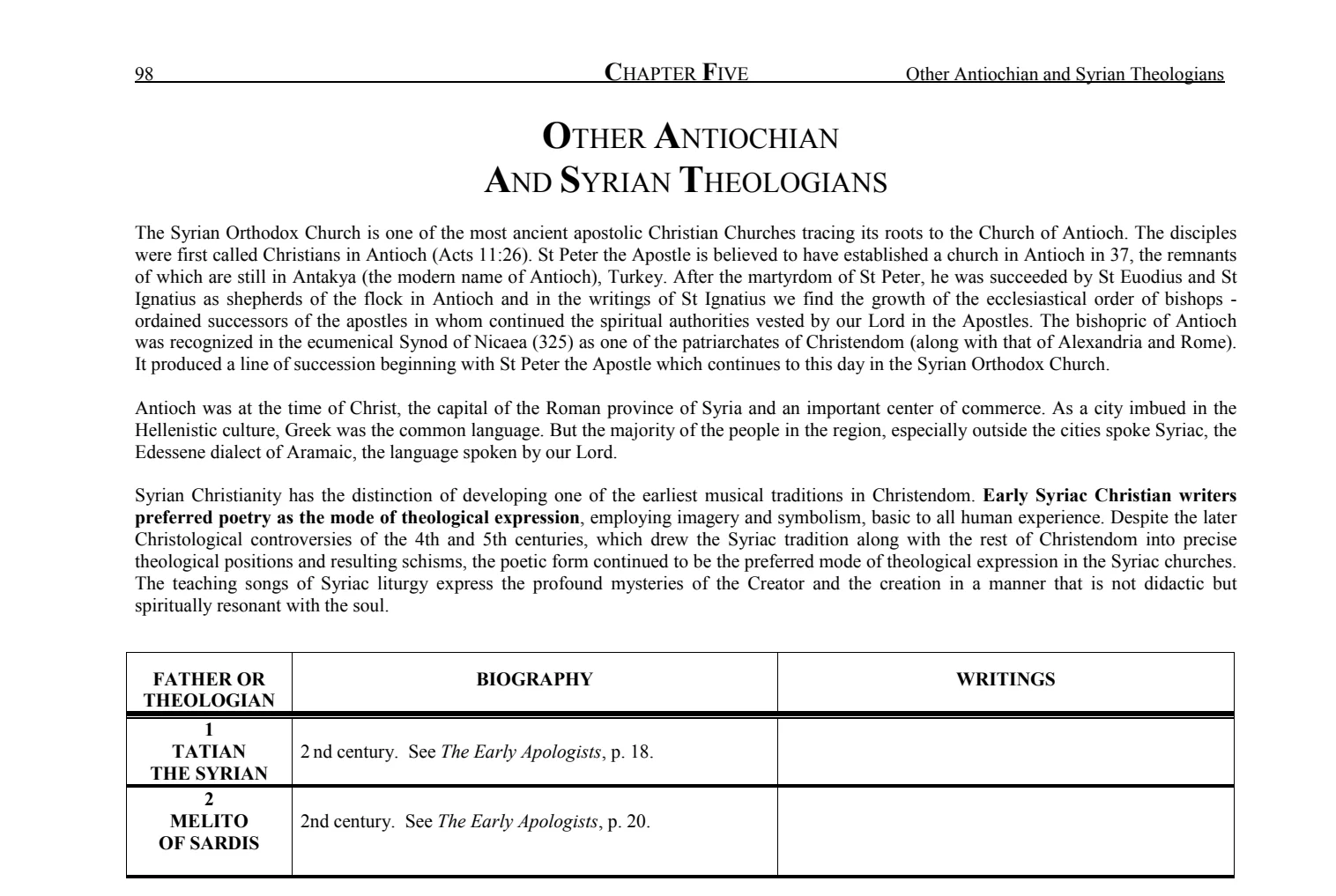
BIOGRAPHY
2 nd century. See The Early Apologists, p. 18.
From A Panoramic View of Patristics by Hegumen Fr. Tadros Yacoub Malaty (Preparatory edition, February 2005, St George’s Coptic Orthodox Church, Sporting, Alexandria).
Chapter 1, Early apologists, pp. 14–15
Chapter 5, Other Antiochian and Syrian theologians, pp. 98–99
Original book pages (3)